
Aluminum Casting Foundry for Industrial & Automotive Applications
JC Casting is a Customize aluminum casting foundry with ISO Certificate in China. We focus on aluminum Casting production in different casting processes: Investment casting, sand casting, die casting.
As an experienced aluminum casting company, we manufacture and supply aluminum cast components for OEMs, valve manufacturers, pump manufacturers, and machinery producers worldwide. JC Casting serves as a reliable aluminum casting supplier, delivering stable quality, consistent lead times, and cost-effective solutions.
What Is Aluminum Casting?
Aluminum casting is a kind of metalworking process. By pouring molten aluminum into a precision-designed die or mold. After cooling, the part is removed from the mold. Then get the desired shape casting parts. The mold must be made with precision. Because its quality will have a direct impact on the shape and surface of the finished aluminum alloy casting.
Compared with steel or iron castings, aluminum castings are preferred when weight reduction, heat dissipation, and good machinability are important.
JC Casting, as a dedicated aluminum casting factory, produces components suitable for precision, high-volume, and functional applications.
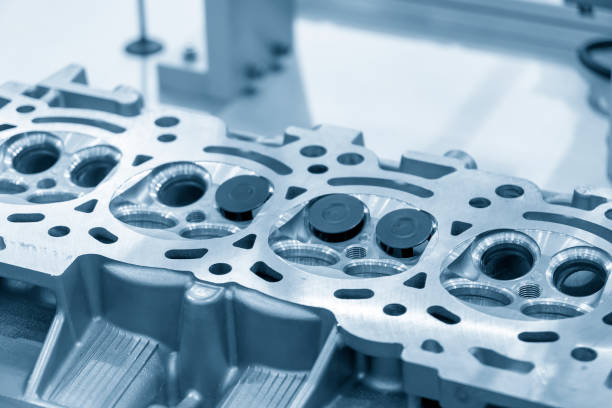
Features
Aluminum alloy casting is a highly versatile process. Its fluidity, low melting point and rapid heat transfer can result in shorter casting cycles and decreased production time. Besides it, the additional benefits including
- High strength-to-weight ratio
- Excellent corrosion resistance
- Outstanding thermal and electrical conductivity
- Complex Shapes Available
- Less Machining, Low Cost
Aluminum Casting Company, Process
JC Casting is an aluminum casting company in China. We have our own foundry and machining workshops.
For aluminum casting, there is not only one casting process for aluminum casting. Such as Aluminum die casting, Aluminum permanent mold casting, Aluminum sand casting (green sand and dry sand), Aluminum investment casting, Aluminum continuous casting, etc.
Aluminum Alloy Casting
Aluminum alloys contain a high percentage of aluminum alloyed with copper, magnesium, silicon, tin, manganese or zinc. They are lightweight and corrosion-resistant and are the alloy of choice for many aerospace applications due to these properties. Aluminum alloys can be strengthened through either heat treatment or cold-working processes, depending on the alloys.
Precision Investment Casting for Aluminum Alloys
Engineered Precision Casting Company, Inc. provides aluminum alloy casting for prototype to large-scale production runs. We use a master heat system to strictly control our metal inventory and have experience pouring over 75 ferrous and non-ferrous air-melt alloys. For precision investment casting applications requiring additional finishing and services, we also offer heat treatment, non-destructive testing, and more.
Our specialty is casting complex parts for demanding applications. We have extensive experience casting thin-walled and multi-cored aluminum projects for various aerospace customers, utilizing our extensive casting history dating back 70+ years. Contact us to discuss your investment casting project or for assistance selecting the appropriate alloy for your application.
Aluminum Alloy Casting Materials
Aluminum alloys are used for investment casting a wide range of components including those for aircrafts and engines including fittings, housings, levers, valves, impellers, and more. Our aluminum alloy casting material options include:
- A-356 Casting Alloy: contains silicon, magnesium, iron and zinc. It provides excellent corrosion resistance and good weldability and can be heat treated to improve strength.
- A-357 Casting Alloy: is composed of silicon, beryllium, iron, copper, magnesium, titanium, zinc and manganese. It provides high strength and corrosion resistance and can be heat treated to improve the strength characteristics.
- C-355 Casting Alloy: contains silicon, iron, copper, manganese, magnesium, zinc and titanium. It offers excellent corrosion resistance and has good weldability.
- F-357 Casting Alloy: composed of silicon, iron, copper, magnesium, titanium, zinc and manganese. It provides high strength and can be heat treated to improve strength characteristics.
Aluminum Casting Process
Casting aluminum is one typical method to get casting parts by pouring molten aluminum into a steel mold. The steel mold has to be precision processed to ensure that the cast piece gets a smooth and refined surface.
In order to discuss the aluminum casting process, it is necessary to examine the different methods. JC Casting can provide many processes customers would prefer.
- Die Casting: There are two types of die casting: low-pressure and high-pressure die casting.
- Sand Casting
- Investment Casting
- Permanent Mold Casting
- Centrifugal Casting
In previous, we wrote a special blog: 7 Top Aluminum Casting Process It explains 7 top aluminum casting methods’ advantages and disadvantages.
Aluminum Casting Alloys
Cast aluminum alloys Classification is developed by the Aluminum Association of the United States.
Each cast alloy is designated by a four-digit number. Here are eight different aluminum alloys.
The number is from one to eight. The first three numbers show the alloy with which aluminum has been combined.
Cast Aluminum Grades
| Grade | Alloys | Strength | Cracking | Corrosion Resistance | Finishing Capabilities | Weldability |
| 100.X | Unalloyed | Work Hardening | 1 | 3 | 5 | |
| 200.X | Cu | Heat Treatment | 4 | 4 | 1To3 | 2 To 4 |
| 300.X | Mg, Si, Cu | Work Hardening | 1 | 1 | 1 | 3 |
| 400.X | Si | Undetermined | 4 | 1 | 1 | 3 |
| 500.X | Mg | Work Hardening | 1 | 1 | 1 | 2 |
| 700.X | Zn | Heat Treatment | 1 | 4 | 3 | 1 |
| 800.X | Sn/ Tin, Cu, Ni | Heat Treatment | 5 | 5 | 5 | 5 |
Wrought Alloys Cast Aluminum Grades
| Grade | Alloys | Strengthening | Corrosion Resistance | Ability To Be Worked | Weldability | Strength |
| 1000 | Unalloyed | Work Hardening | 1 | 1 | 3 | 5 |
| 2000 | Cu | Heat Treatment | 4 | 4 | 5 | 1 |
| 3000 | Mn | Work Hardening | 2 | 1 | 1 | 3 |
| 4000 | Si | Undetermined | 4 | 1 | 1 | 3 |
| 5000 | Mg | Work Hardening | 1 | 1 | 1 | 2 |
| 6000 | Mg And Si | Heat Treatment | 3 | 2 | 2 | 2 |
| 7000 | Zn | Heat Treatment | 1 | 4 | 3 | 1 |
| 8000 | Sn/ Tin, Cu, Ni | Limited | – | – | – | – |
Aluminum Grades We Cast
As a qualified aluminum casting foundry, JC Casting offers a wide range of aluminum alloys to meet different mechanical, thermal, and cost requirements.
Common Aluminum Casting Alloys
- AlSi7Mg / AlSi10Mg – High-strength, corrosion-resistant aluminum alloys
- ADC12 / A380 / A383 – Widely used in die casting and high-volume production
Material selection is based on application, mechanical requirement, and budget considerations.
Typical Applications & Industries
JC Casting supplies aluminum castings as a trusted aluminum casting supplier to multiple industries:
- Valve bodies and housings
- Pump components and casings
- Automotive engine blocks and housings
- Aerospace and defense components
- Industrial machinery and electrical enclosures
Each application is reviewed to ensure alloy selection, casting process, and surface finish meet functional requirements.
Product Description Of Our Aluminum Aluminum casting Services
- Wide range of machining aluminum materials:Aluminum 6061, Aluminum 2024, Aluminum 5052, Aluminum 6063,Aluminum 7050,Aluminum 7075,Aluminum MIC-6
- Custom Colors:Black, Natural, Blue, Green and different colors as your requirements
- Surface Finishing:Sand blasting, shot blasting, polishing, anodizing, oxidation, electrophoresis, chromate, powder coating and painting
- Various Aluminum CNC Machining Process: CNC aluminum turning, CNC aluminum drilling
- Aluminum CNC Machining Applications:Aluminum CNC parts can be applied to automotive, electrics, military, medical, aircraft, power generation, aerospace, and industrial engineering
Aluminum Casting Processes We Use
Choosing the correct casting process is essential for achieving performance, accuracy, and cost-effectiveness. As a professional aluminum casting company, JC Casting provides:
Die Casting (High-Pressure Casting)
- Suitable for high-volume, thin-walled, precision parts
- Excellent surface finish and dimensional stability
- Ideal for automotive and electronics components
Sand Casting
- Suitable for large or medium-sized aluminum components
- Flexible for prototypes and low-volume production
- Supports thicker walls and complex geometries
Our aluminum casting foundry recommends the optimal process based on part size, design complexity, and tolerance requirements.
What is the different between die casting and sand casting?
Dimensional Accuracy & Surface Finish
Our aluminum casting factory produces castings with controlled tolerances suitable for both precision and structural applications:
- Die cast aluminum parts achieve near-net shape, minimizing machining
- Sand cast aluminum components optimized for strength and performance
- Machining allowances carefully calculated to reduce cost
Quality Control & Standards
JC Casting, as a professional aluminum casting foundry, follows strict quality management procedures:
- Standards: ASTM / EN / DIN / ISO
- Inspection: Chemical composition, mechanical testing, dimensional inspection, surface quality check
- Traceability for all batches and certifications provided
This ensures all aluminum castings meet industry and customer requirements.
Cost & Lead Time Considerations
Aluminum casting provides an excellent cost-to-performance ratio, especially when weight reduction or corrosion resistance is required.
As an experienced aluminum casting company, JC Casting helps optimize:
- Alloy selection
- Casting process
- Machining allowance
- Batch size and production planning
Resulting in predictable lead times and competitive total cost.
Secondary Operations & One-Stop Service
JC Casting’s aluminum casting factory provides comprehensive services to simplify procurement:
- CNC machining
- Heat treatment
- Surface finishing (anodizing, coating, polishing)
- Assembly support
This enables customers to source finished parts from a single aluminum casting supplier.
Why Choose JC Casting as Your Aluminum Casting Supplier?
- Experienced aluminum casting foundry with export capability
- Expertise in automotive, valve, pump, and machinery components
- Stable quality control and inspection systems
- Engineering support from design review to final delivery
- Reliable aluminum casting supplier for global OEM customers
JC Casting focuses on long-term partnerships built on technical reliability and consistent quality.
Frequently Asked Questions
Q1: What are aluminum castings commonly used for?
Aluminum castings are widely used in automotive engine components, pumps, valves, industrial machinery, and aerospace applications.
Q2: Is aluminum casting suitable for high-volume production?
Yes. Die casting is ideal for high-volume, precision aluminum components.
Q3: Typical lead time for aluminum castings?
Depends on part size, complexity, and casting process, generally 2–6 weeks for standard production.
Contact an Aluminum Casting Foundry
Looking for a reliable aluminum casting foundry, aluminum casting factory, or aluminum casting supplier?
JC Casting is ready to support your project with professional engineering and manufacturing services.
Send us your drawings or specifications to receive a technical evaluation and quotation from an experienced aluminum casting company.