
JC Casting is a professional stainless steel casting foundry and stainless steel casting factory, providing reliable casting solutions for valve, pump, and industrial equipment manufacturers worldwide.
As an experienced stainless steel casting company, we focus on producing precision cast components with controlled quality, stable lead times, and full engineering support. We work as a long-term stainless steel casting supplier for customers in oil & gas, chemical processing, marine, and industrial machinery industries.
What is Stainless Steel Casting?
Stainless steel casting, also known as lost wax investment casting, is a precision casting process for manufacturing stainless steel parts. In this process, a wax pattern is made to the exact shape of the desired part. This wax pattern is then coated with multiple layers of refractory materials to form a shell. When the shell is hardened, the wax is melted out, leaving a hollow cavity. Molten stainless steel is then poured into this cavity. As the metal cools and solidifies, it takes on the shape of the original wax pattern. Then get the stainless steel casting parts!
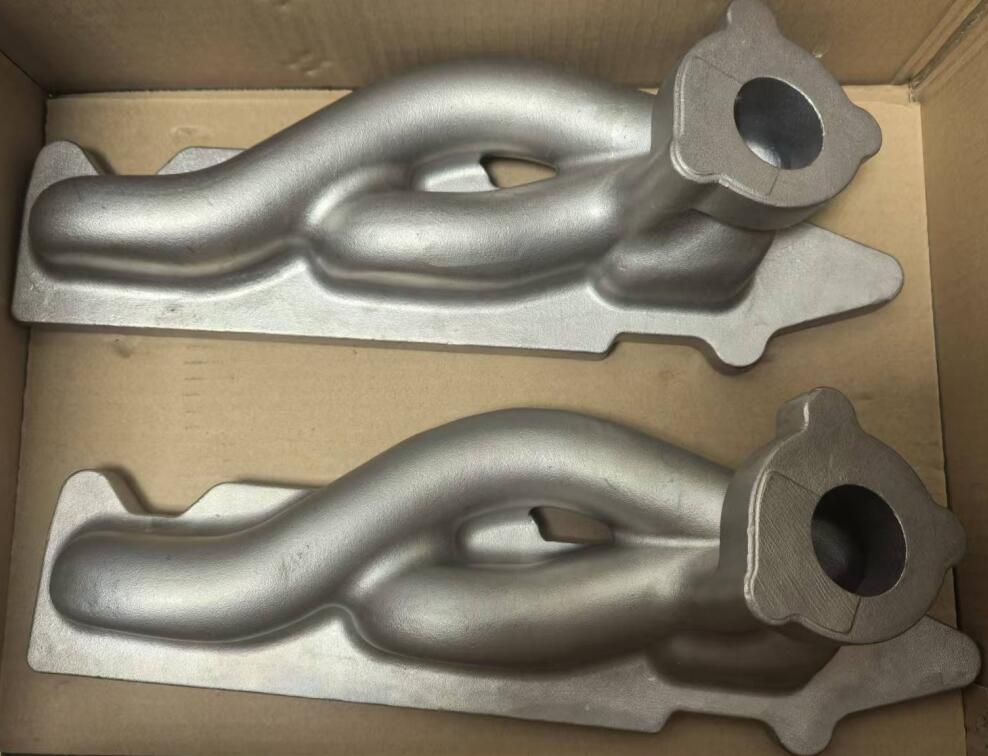
JC Casting is a Stainless Steel Casting Manufacturer in China. We have Stainless Steel Casting foundry with different stainless steel grades.
Advantages of Stainless Steel Casting (Lost Wax Casting)
Investment casting is the primary process used in our stainless steel casting foundry.
Key benefits:
- High dimensional accuracy
- Smooth surface finish
- Suitable for complex and thin-walled components
- Near-net shape, reducing machining cost
Here, we have a full article to introduce the Advantages and disadvantages of Stainless Steel Casting. Kindly view it
Typical Stainless Steel Casting Applications
JC Casting works with customers across multiple industries as a trusted stainless steel casting supplier, including:
- Valve bodies and valve components
- Pump housings and impellers
- Pipe fittings and flanges
- Chemical processing equipment
- Marine and offshore components
- Food-grade and hygienic systems
Each application is reviewed to ensure compliance with material and performance requirements.
The Grade for Stainless Steel Casting
JC Casting has experience pouring a wide variety of stainless steel investment casts. Here, we listed the most common stainless steel grade alloys we have poured below. If you need we can provide the Specific material chemistry and mechanical specifications.
300 Series Stainless Steel Casting Alloys
Austenitic 300 series stainless steel is a nonmagnetic chromium-nickel alloy. These stainless steel casting alloys are known for their excellent corrosion resistance. but they cannot gain strength through heat treatment. SS 304L and SS 316L alloys also resist corrosion caused by welding and other high-temperature finishing processes. 300 series alloys are commonly used to invest cast piping and housings for industries. Including medical, marine, food and dairy. We provide a range of 300 series stainless steel casting alloys including:
· 302
· 303
· 304
· 304-L
· 310
· 312
· 316
· 316-L
· 319
· 330
· 347
· BS-3146
· Nitronic 50
400 Series Stainless Steel Casting Alloys
Martensitic 400 series stainless steel is a chromium-magnesium alloy. It provides high strength and machinability. This type of stainless steel is magnetic. It can be hardened through quench and tempering to produce high strength. 400 series is frequently used for investment casting machine parts and valves for automotive and agriculture applications. We offer the following alloys:
· 410
· 416
· 418
· 420C
· 430
· 436
· 440A
· 440C
Precipitation Hardening Stainless Steel Casting Alloys
Precipitation hardening alloys provide high strength and corrosion resistance. They are magnetic and can be heat treated and aged to achieve the strength properties of martensitic steels while maintaining corrosion resistance. Precipitation hardening investment casting alloys are widely used by the military and in aerospace and petrochemical applications. We provide PH stainless steel castings using the following alloys:
· PH 15-5
· PH 17-4
· CD4MCu (25-5)
Common Cast Stainless Steel Grades and typical usages
| Common Grade | Features | Applications |
| SS 304 | Austenitic stainless steel with Ni content of more than 8%. Food grade alloy, can be used to cast stainless steel components for both household and commercial applications. It is the most widely used stainless steel casting material. | Food industry, chemical industry, mechanical equipment, pipe industry, automotive industry, Housings, medical, watering, mining, petrochemical. |
| SS 316 | SS316 is the second most common austenite steel. It is used mainly to increase resistance to corrosion. The Ni content is more than 10%. It has better corrosion resistance than 304 stainless steel castings. 316 stainless steel castings are better suited for the marine environment with harsh air conditions or chemical materials. | Fire fighting, auto parts, marine hardwares, chemical, pipeline, construction, decoration, food industry, etc Housings, gears, plates automotive, food & dairy and petrochemical environments. |
| SS 304L / 316L | The mechanical properties are close to those of ss 304 and 316 materials. “L” represents lower carbon content. The material is more ductile. has good welding performance, and has more reliable corrosion resistance. The price is higher than that of materials of the same grade. | Food, chemical, medical, plumbing, medical, petrochemical |
| SS 410 / 416 | Series 400 belongs to martensitic stainless steel. High strength, good processing performance and high heat treatment hardness, and does not contain Ni, so the corrosion resistance is weak. They will tend to break rather than bend under intense pressure. | Automotive parts, food & dairy, machine tools, knives, Housings, bushings, handles, brackets |
| PH 17-4 | Most common precipitation-hardening martensitic stainless steel. Its content is about 17% chromium and 4% nickel. good corrosion resistance. 17-4 is the strongest of the stainless steel family. Usually used for products and components that are not prone to deformation. | Military, medical, mechanical components, machine tools, turbine blades,ods, pins, links, arms. |
| 2205 Duplex | Duplex stainless steel 2205 is composite stainless steel consisting of 22% chromium, 2.5% molybdenum, 4.5% nickel-nitrogen. Used for its good mechanical properties and excellent corrosion resistance properties. | Sporting, pump & valve industry. |
Chemical Compositions
| Grades | C | Si | Mn | S | P | Cr | Ni | Mo |
| 304 | ≤0.08 | ≤1.00 | ≤2.00 | ≤0.03 | ≤0.045 | 18 ~ 20 | 8 ~ 11 | – |
| 304L | ≤0.03 | ≤1.00 | ≤2.00 | ≤0.03 | ≤0.035 | 18 ~ 20 | 8 ~ 12 | – |
| 316 | ≤0.08 | ≤1.00 | ≤2.00 | ≤0.03 | ≤0.045 | 16 ~ 18 | 10 ~ 14 | 2 ~ 3 |
| 316L | ≤0.03 | ≤1.00 | ≤2.00 | ≤0.03 | ≤0.045 | 16 ~ 18 | 10 ~ 14 | 2 ~ 3 |
| 410 | ≤0.03 | ≤1.00 | ≤1.00 | ≤0.03 | ≤0.040 | 11 ~ 13.5 | ≤0.6 | – |
| 416 | ≤0.15 | ≤1.00 | ≤1.25 | ≤0.15 | ≤0.060 | 12 ~ 14 | ≤0.6 | – |
| 17-4 ph | ≤0.07 | ≤1.00 | ≤1.00 | ≤0.03 | ≤0.040 | 15.5 ~ 17.5 | 3 ~ 5 | – |
| 2205 | ≤0.03 | ≤1.00 | ≤2.00 | ≤0.03 | ≤0.040 | 21 ~ 24 | 4.5 ~ 6.5 | 2.5 ~ 3.5 |
More information is on the introduction of How Many Stainless Steel Grades
How to cast the Stainless Steel investment casting
Stainless Steel Investment Casting Process
1. Make Wax Model
Once the mold is finished, inject wax material into the mold cavity.We get a wax model from the mold after cooling. 2. Repair the wax model
2. Repairing wax model
Repair some appearance defects of wax models. Such as slot, wax injection nozzle, flow pattern.
3. Assembly
After inspection wax models, weld them to the casting system one by one to form an assembly. It looks like a tree.
4. Shell Making
The shell-making process is a whole silica sol process. It is to dip the assembly into a good colloidal silica coating. sprinkle with fire-resistant sand. dry and harden shell under certain temperatures. Thus to form dense refractory coating surface outside the surface of wax models.
Then repeat steps 5-6 times. Finally form a certain strength and refractoriness of silica sol shell.
5. Dewaxing
Dewaxing is a process in which the wax inside the shell is melted by high-temperature steam. Then drain out the melted wax. To get a cavity that can be poured into the mold.
6. Pouring
Melted stainless steel ingots into liquid status under a certain high temperature. Then pour the liquid into the shell and cool under room temperature.
Shell Knocking After solidification, knock out the Shell and clean sand .
7. Cutting, Grinding
Cut the stainless steel casting blanks from assembly one by one. Remove the sprue gate by grinding machine. Smooth the surface by various surface finishes. Such as shot blasting, sandblasting, electropolishing, mirror polishing.
8. Inspection
After finishing production, inspection is also an indispensable process before delivery. The stainless steel castings inspection includes dimensional inspection, defects inspection and material inspection. Only qualified products can be shipped to customers.
Post Treatments of Stainless Steel Casting
After Stainless Steel Casting is finished,it will be deep processing. That is the Post Treatments of Stainless Steel Casting. In JC Casting, our main Post Treatments include:
- Heat Treatment: Solution Treatment
- Post Machining
- Surface Finish
Heat Treatment: Solution Treatment
Heat Treatment: Solution TreatmentSolution treatment is a kind of heat-treatment process.
In heating processing, stainless steel castings are heated to a high temperature and maintained at constant temperature in the single-phase zone.
So that the excess phase is fully dissolved into the solid solution. Then cooled rapidly. Finally, we get the su-saturated solid solution.
Unlike heat treatment for other steel investment castings, solution treatment is the only heat treatment method for the stainless steel investment casting process.
The purpose of solution treatment is mainly used to eliminate internal stress. And improve the stainless steel components’ mechanical properties. (e.g. corrosion resistance, ductility, or hardness). It can make the post-machining be easier.
PS:
Before stainless steel castings solution treating operation, casting blank surface cleaning is necessary. Such as removing oils, grease, and other types of residue. Because during stainless steel casting heat treating, The surface leftover may occur degrading the corrosion resistance or other properties of the products.
Post Machining
Investment casting is the primary method for stainless steel parts production. It can create near-net shape products. even without secondary machining.But it does not mean machining can be saved for all the stainless steel cast products.
when there is a closer tolerance and surface finish requirement that casting can not reach. Post Machining will have to be used. We can remove excess material by grinding, milling, drilling. We also have our own CNC Center. CNC machining is the most precise machining process. But the cost is high.
After machining, quality Inspection is also very critical. we use manual inspection equipment and gages as well as the latest in coordinate measuring machine (CMM) technology to measure and record all the dimensions. This ensures our customers always get the quality they want.
Surface Finishes
For stainless steel casting, there are several surface treatment methods to improve its appearance qualtiy. It includes shot blasting, sandblasting, electropolishing, mirror polishing, powder coating.
- Shot Blasting: The most common and Low-cost surface finish method. It can remove casting surface mill scales, burrs. It is the process to smooth stainless steel castings by the grinding of small steel balls in a shot blasting machine.
- Sand Blasting: The process of cleaning the stainless steel casting surface by the impact of high-speed sand flow. The surface is more smooth than that of sand casting. But the cost is higher.
- Electropolishing: Take stainless steel castings as the anode for electrolysis. It is used in an appropriate electrolyte to remove its rough surface. It can improve its surface smoothness. The surface becomes a bit bright after electropolishing.
- Mirror Polishing: It is the manual polishing process operated with a grinding wheel. After finishing, the casting surface will look very shining like a mirror. This treatment is the most time costing surface finish method. Mirror Polishing is only suitable for outside areas of stainless steel castings.
- Powder Coating: A surface treatment method for spraying plastic powder onto stainless steel castings. Like painting, there are different colors selected.
- Glass Bead Blasting: Glass bead blasting method to refine the surface of stainless steel castings. The surface smooth of sand glass bead blasting looks better than shot blasting. But the cost is higher.
- Brush Finishing: A brushed finish typically has a uni-directional satin finish. The brushing gives cast stainless steel parts a distinct look. It retains parts metallic luster and is given a pattern of very fine lines parallel to the brushing direction.
- Pickling & Passivation: Pickling is a chemical treatment way to eliminate surface dirt like oxide skin, rust, welding spots. Passivation is a process that forming a new abundant chromium protective layer. It can improve the anti-oxidation ability of stainless steel castings.
Get a Quote from a Stainless Steel Casting Foundry
Looking for a reliable stainless steel casting foundry, factory, or supplier?
JC Casting is ready to support your project with professional engineering and manufacturing services.
Send us your drawings or specifications to receive a technical evaluation and quotation from an experienced stainless steel casting company.