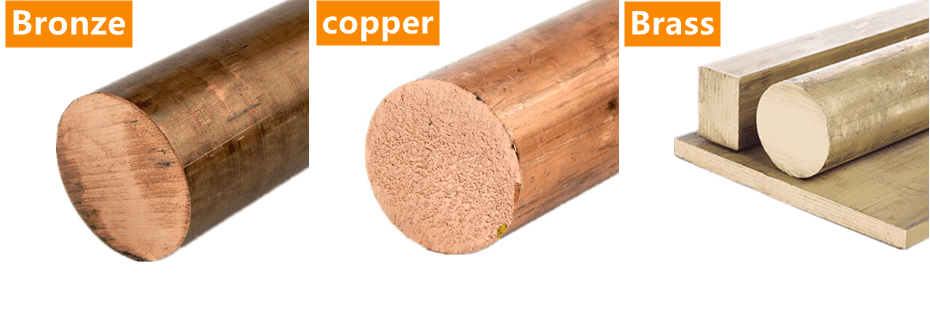
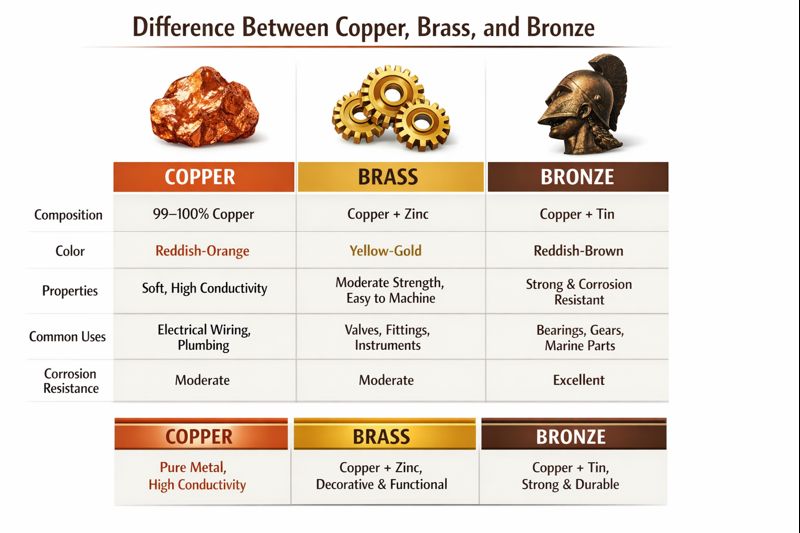
Copper, brass, and bronze are all widely used metals in various industrial applications, including casting. However, they have distinct properties, compositions, and uses. Understanding the differences between them is essential when selecting the right material for specific casting needs. In this article, we will explore the key differences between copper, brass, and bronze, focusing particularly on their applications in casting processes.
What is Copper?
Composition: Copper is a soft, reddish-brown metal that is known for its excellent electrical conductivity.
Common Uses: Electrical wiring, plumbing, and HVAC systems.
Casting Applications: Copper casting is primarily used for applications requiring high electrical conductivity, such as electrical connectors and power transmission components.
What is Brass?
Composition: Brass is an alloy of copper and zinc, and it is known for its yellow color and durability. The amount of zinc can vary, typically ranging from 5% to 40%, which impacts the properties of the brass.
Common Uses: Brass is commonly used for making musical instruments, plumbing fixtures, and decorative hardware.
Casting Applications: Brass is widely used in casting due to its machinability and corrosion resistance. It is commonly used for making valves, fittings, and intricate mechanical components.
What is Bronze?
Composition: Bronze is an alloy of copper and tin, and it is known for its strength and corrosion resistance. and may also contain other elements like phosphorus, aluminum, or silicon.
Common Uses: Bronze is ideal for applications that require durability, strength, and resistance to corrosion, particularly in marine environments.
Casting Applications: Bronze is often used in casting components like bearings, gears, and marine parts due to its high strength and excellent wear resistance.
All three alloys have similar properties. They are used in different applications due to their unique characteristics.
Difference Between Copper Brass and Bronze
Here’s a clear, detailed breakdown of the differences between Copper, Brass, and Bronze from a materials and industrial perspective:
1. Basic Composition
Material
Primary Components
Notes
Copper
99–100% copper
Pure metal, sometimes with trace elements for strength.
Brass
Copper + Zinc
Zinc content varies (usually 5–40%). Sometimes small amounts of lead added for machinability.
Bronze
Copper + Tin
Tin content varies (usually 5–12%). Can include small amounts of aluminum, phosphorus, or silicon depending on type.
2. Color and Appearance
Material
Typical Color
Copper
Reddish-orange, deepens with age (patina forms green over time)
Brass
Yellow-gold to reddish-gold, brighter than bronze
Bronze
Reddish-brown to dark brown, sometimes with a green patina