
Choosing the right boat hinges is absolutely crucial for durability, corrosion resistance, and a long lifespan. Honestly, it’s just as important as picking the right hatch or door.At JC Casting, we specialize in custom marine hinges. We provide OEM stainless steel and marine-grade cast hinges for shipyards, marine equipment manufacturers, and hardware brands all over the world.
With over 20 years of precision casting experience, we produce high-quality boat hinges using investment casting, precision machining, and strict quality inspection. Whether you need standard marine hinges or custom-designed hardware based on drawings, we provide complete manufacturing solutions from prototype to mass production.
This guide explains everything buyers typically want to know—including boat hinge types, manufacturing processes, material options, applications, and answers to the most common purchasing questions.
What Is a Boat Hinge?
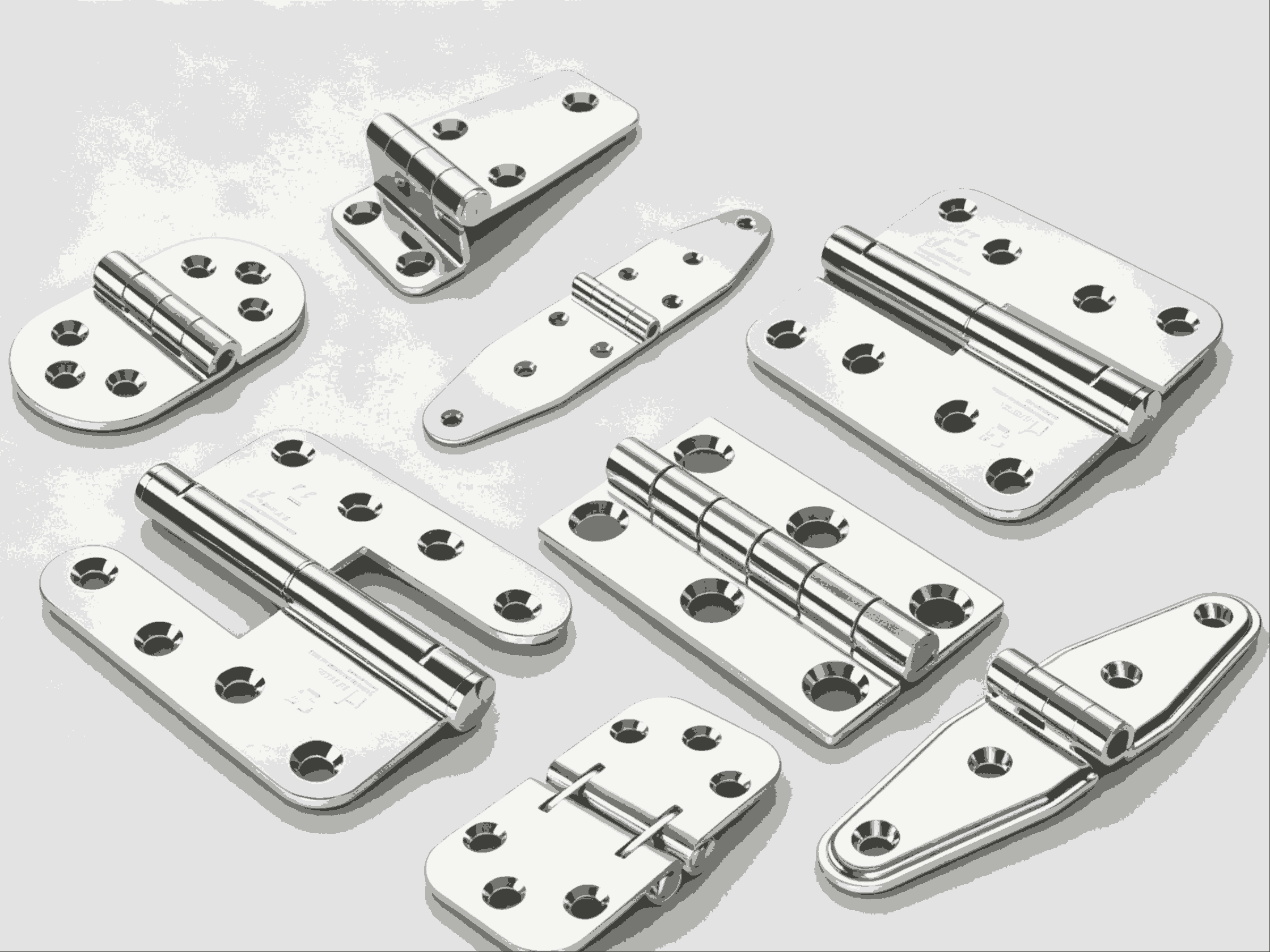
A boat hinge is a marine hardware component that connects two parts while allowing controlled rotational movement. It is commonly installed on:
- Boat hatches
- Deck access panels
- Storage lockers
- Cabin doors
- Livewell lids
- Engine covers
- Console doors
- Seat compartments
Unlike standard residential hinges, marine hinges must withstand:
- Continuous saltwater exposure
- UV radiation
- Heavy vibration
- Dynamic loads during navigation
- Frequent opening and closing cycles
For these reasons, marine-grade stainless steel cast hinges have become the preferred choice for commercial vessels, yachts, fishing boats, and offshore equipment.
Our Boat Hinge Product Range
JC Casting manufactures various marine hinge designs to meet different installation requirements.
Butt Hinges
The most widely used boat hinge for hatches, cabinet doors, lockers, and access panels.
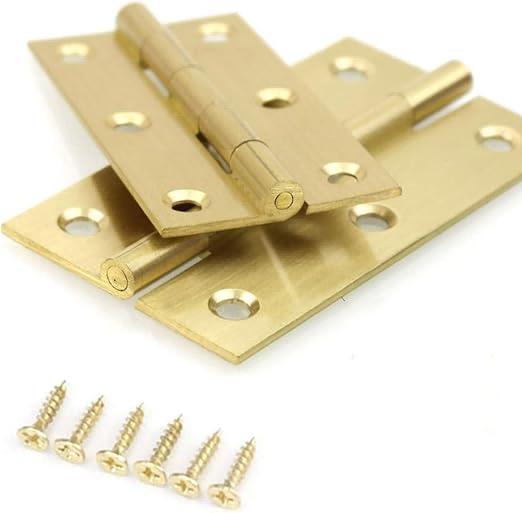
Features:
- Compact design
- Excellent load capacity
- Smooth rotation
- Easy installation
- Suitable for most marine applications
Flush Mount Hinges
Designed for installations where a clean, low-profile surface is required.
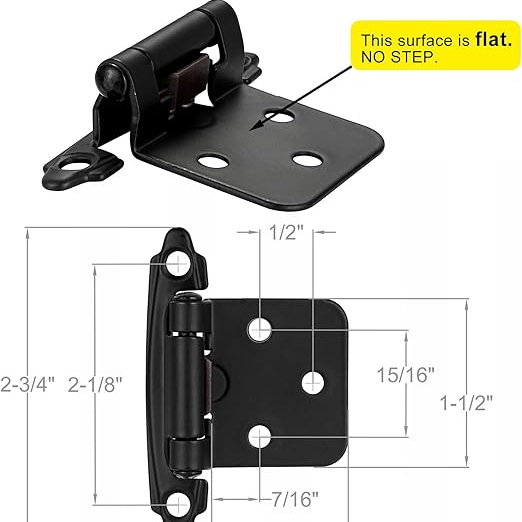
Benefits:
- Reduced trip hazards
- Professional appearance
- Better deck aesthetics
- Suitable for premium boats and yachts
Offset Hinges
Offset hinges move the pivot point outward to provide additional opening clearance.
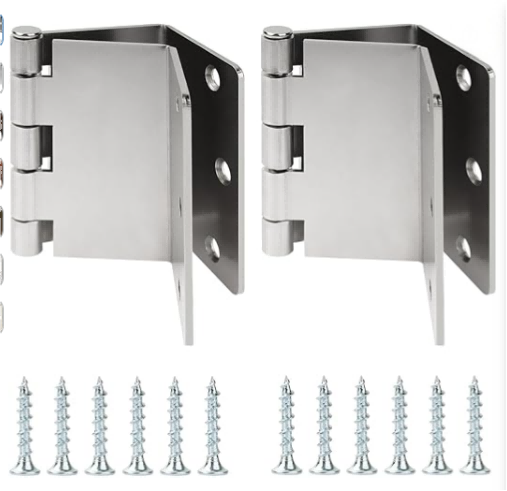
Common uses include:
- Thick hatch covers
- Deep storage compartments
- Equipment access doors
Strap Hinges
Ideal for larger doors and heavy-duty applications.
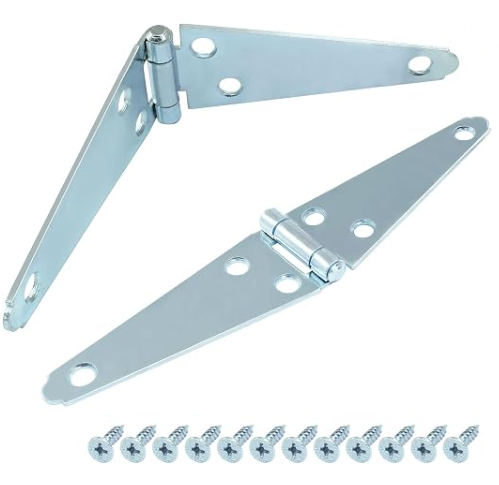
Advantages:
- Longer load distribution
- Higher structural strength
- Excellent support for oversized lids
Custom OEM Boat Hinges
Many marine projects require hinges that are unavailable as standard catalog products.
JC Casting provides fully customized production based on:
- CAD drawings
- STEP files
- Samples
- Customer specifications
Customization options include:
- Dimensions
- Thickness
- Hole patterns
- Surface finish
- Logo engraving
- Load requirements
- Opening angle
- Pin diameter
How to Choose the Right Boat Hinge?
Not all boat hinges are designed for the same job. The right hinge depends on where it will be installed, how much weight it needs to support, the marine environment, and the expected service life. Choosing the wrong hinge can lead to misaligned hatches, difficult operation, premature corrosion, or even hardware failure.
When selecting a boat hinge, consider the following six factors.
1. Identify Where the Hinge Will Be Installed
The first step is determining the application. Different locations on a boat place different demands on the hinge.
| Installation Area | Recommended Hinge Type | Why It Works |
| Deck Hatch | Butt Hinge / Flush Hinge | Strong support with smooth operation |
| Storage Locker | Butt Hinge | Compact and easy to install |
| Cabin Door | Butt Hinge / Offset Hinge | Reliable daily use with sufficient opening angle |
| Engine Hatch | Strap Hinge | Better load distribution for heavy lids |
| Livewell Lid | Flush Hinge | Low-profile design reduces trip hazards |
| Console Door | Butt Hinge | Clean appearance and dependable performance |
Tip: For most recreational boats, butt hinges remain the most versatile and widely used option because they balance strength, appearance, and installation simplicity.
2. Consider the Weight of the Hatch or Door
One of the most common causes of hinge failure is selecting a hinge that cannot adequately support the load.
Ask yourself:
- Is the hatch lightweight or heavy?
- How often will it be opened?
- Will it remain open for extended periods?
- Does it experience vibration while underway?
As a general guideline:
| Load Requirement | Recommended Hinge |
| Light-duty compartment lids | Standard Butt Hinge |
| Medium-weight hatches | Heavy-Duty Butt Hinge |
| Large engine covers | Strap Hinge |
| Wide access panels | Continuous (Piano) Hinge |
Selecting a hinge with sufficient load capacity reduces stress on both the hinge pin and mounting screws, helping extend the service life of the entire assembly.
3. Choose the Right Material for the Marine Environment
Marine hardware is constantly exposed to moisture, salt, and changing temperatures. Material selection has a direct impact on durability and maintenance requirements.
| Environment | Recommended Material |
| Freshwater lakes and rivers | 304 Stainless Steel |
| Coastal marinas | 316 Stainless Steel |
| Offshore saltwater | 316 Stainless Steel or Duplex Stainless Steel |
| Heavy commercial marine use | Duplex Stainless Steel 2205 |
| Traditional or classic yachts | Marine Bronze |
For most boats operating in saltwater, 316 stainless steel is considered the industry standard because it offers excellent resistance to pitting and crevice corrosion caused by chlorides.
4. Determine the Required Opening Angle
Different applications require different opening ranges.
For example:
- 90° Opening – Standard cabinet doors and lockers
- 180° Opening – Deck hatches requiring full access
- Offset Hinges – Ideal when lids must clear raised edges or thick frames
- Lift-Off Hinges – Suitable when doors need to be removed quickly for maintenance
Choosing the correct opening angle improves accessibility while preventing interference between the hatch and surrounding structures.
5. Evaluate the Mounting Style and Appearance
The installation method affects both functionality and aesthetics.
Common mounting styles include:
- Surface Mount – Simple installation and easy replacement.
- Flush Mount – Sits nearly level with the deck for a clean, premium appearance.
- Concealed Mount – Hidden from view, often used on luxury yachts and high-end interiors.
- Offset Mount – Provides additional clearance for thicker lids or recessed openings.
If the hinge will be installed in a highly visible location, polished stainless steel with a flush design is often preferred to complement modern marine styling.
6. Consider Long-Term Durability and Maintenance
A boat hinge should continue to perform reliably after thousands of opening and closing cycles—not just during its first season.
When evaluating a hinge supplier, look for features such as:
- Investment-cast construction for greater structural integrity
- Precision CNC-machined pin holes for smooth operation
- Passivated or electropolished surfaces for enhanced corrosion resistance
- Tight dimensional tolerances for consistent installation
- Marine-grade stainless steel certified to international standards
These manufacturing details can significantly improve long-term reliability while reducing maintenance and replacement costs.
Quick Selection Guide
The table below provides a practical starting point when selecting a boat hinge for common marine applications.
| If You Need… | Recommended Solution |
| General-purpose hatch or locker hinge | Stainless Steel Butt Hinge |
| Premium flush deck appearance | Flush Mount Hinge |
| Heavy engine compartment lid | Heavy-Duty Strap Hinge |
| Maximum corrosion resistance | 316 Stainless Steel |
| Offshore commercial application | Duplex Stainless Steel Hinge |
| Traditional yacht hardware | Bronze Boat Hinge |
| OEM custom dimensions | Custom Investment Cast Boat Hinge |
Need Help Choosing the Right Boat Hinge?
If you’re unsure which hinge best suits your application, JC Casting’s engineering team can help. Simply provide your technical drawing, CAD file, or sample, and we’ll recommend the most suitable hinge type, material, manufacturing process, and surface finish based on your project’s operating environment, load requirements, and production volume. This engineering-first approach helps reduce redesigns, improve durability, and ensure your marine hardware performs reliably in real-world conditions.
Why Choose Precision Cast Boat Hinges?
Marine hinges experience repeated stress throughout their service life. Manufacturing quality directly affects durability, safety, and corrosion resistance.
Compared with stamped or fabricated hinges, precision investment cast hinges offer several advantages:
| Feature | Precision Cast Boat Hinges |
| Higher structural strength | ✓ |
| Better dimensional accuracy | ✓ |
| Smooth surface finish | ✓ |
| Complex shape capability | ✓ |
| Excellent corrosion resistance | ✓ |
| Premium appearance | ✓ |
| Consistent production quality | ✓ |
Investment casting also allows complex marine hardware to be manufactured with minimal machining, reducing production costs while maintaining high precision.
How JC Casting Manufactures Boat Hinges
Our production process combines precision casting with CNC machining to achieve excellent dimensional consistency and long-term performance.
Step 1 – Design Review
Our engineering team evaluates:
- Application requirements
- Load conditions
- Material selection
- Manufacturability
- Cost optimization
We also provide Design for Manufacturability (DFM) suggestions when appropriate.
Step 2 – Tooling Production
High-precision tooling is manufactured to ensure:
- Stable dimensions
- Repeatable quality
- Efficient mass production
Step 3 – Investment Casting
Boat hinge bodies are produced using the lost wax investment casting process.
Benefits include:
- Tight tolerances
- Smooth surfaces
- Minimal porosity
- Excellent repeatability
- Near-net-shape production
Step 4 – Heat Treatment
Depending on the alloy and application, heat treatment improves:
- Mechanical strength
- Hardness
- Wear resistance
- Structural stability
Step 5 – CNC Machining
Critical dimensions receive precision machining, including:
- Pin holes
- Mounting holes
- Bearing surfaces
- Assembly faces
This ensures smooth hinge movement and accurate installation.
Step 6 – Surface Finishing
Available finishes include:
- Mirror polishing
- Satin finish
- Glass bead blasting
- Electropolishing
- Passivation
Marine-grade finishing improves both appearance and corrosion resistance.
Step 7 – Inspection & Quality Control
Every production batch undergoes rigorous inspection, including:
- Dimensional inspection
- Material verification
- Surface quality inspection
- Assembly testing
- Functional rotation test
Additional inspections are available upon request:
- PMI
- Salt spray testing
- Hardness testing
- Mechanical testing
Available Materials
Selecting the right material depends on the operating environment, mechanical load, and corrosion resistance requirements.
| Material | Advantages | Typical Applications |
| Stainless Steel 304 | Cost-effective, good corrosion resistance | Freshwater boats, cabin hardware |
| Stainless Steel 316 | Superior saltwater corrosion resistance | Offshore boats, yachts, marine equipment |
| Duplex Stainless Steel 2205 | Higher strength and chloride resistance | Commercial vessels, offshore structures |
| Bronze | Excellent seawater resistance, classic appearance | Traditional yachts, decorative marine hardware |
| Brass | Attractive finish, good machinability | Interior marine fittings |
| Carbon Steel (coated) | High strength with protective coating | Specialized industrial applications |
Among these options, 316 stainless steel remains the preferred material for most marine hinge applications because of its excellent resistance to pitting and crevice corrosion in saltwater environments.
Surface Finish Options
Boat hardware is continuously exposed to moisture, salt, and sunlight. Surface finishing therefore plays a critical role in long-term performance.
Available finishes include:
- Mirror Polish
- Satin Brushed Finish
- Electropolished Finish
- Passivated Surface
- Glass Bead Blasted Finish
- Custom Surface Treatment
These finishes improve corrosion resistance while enhancing the appearance of marine hardware.
Typical Applications
Our boat hinges are used across numerous marine industries.
Recreational Boats
- Storage compartments
- Deck hatches
- Cabin doors
- Livewell lids
Luxury Yachts
- Flush deck hatches
- Interior cabinets
- Engine room access
- Premium furniture
Commercial Fishing Boats
- Fish box covers
- Storage lockers
- Utility compartments
- Work deck access
Workboats
- Equipment doors
- Battery compartments
- Maintenance panels
- Service hatches
Offshore Marine Equipment
- Control enclosures
- Instrument cabinets
- Protective access covers
- Equipment housing doors
Why Marine Equipment Manufacturers Choose JC Casting
Choosing the right manufacturing partner is just as important as choosing the right hinge.
JC Casting offers:
- Over 20 years of precision casting experience
- OEM & ODM manufacturing
- Marine-grade stainless steel expertise
- Investment casting and CNC machining under one roof
- Flexible production from prototypes to high-volume orders
- Strict quality management
- Competitive factory-direct pricing
- Fast quotation and engineering support
- Global export experience
Whether you are developing a new marine product or replacing an existing hinge design, our engineering team can help optimize both performance and manufacturing cost.
Frequently Asked Questions
What is the best material for boat hinges?
For most marine environments, 316 stainless steel is the preferred choice because it provides excellent corrosion resistance in saltwater while maintaining high mechanical strength.
What’s the difference between 304 and 316 stainless steel boat hinges?
304 stainless steel performs well in freshwater and indoor marine environments. 316 stainless steel contains molybdenum, providing significantly better resistance to chloride-induced corrosion, making it ideal for offshore and coastal applications.
Can you manufacture custom boat hinges?
Yes. We specialize in OEM and custom manufacturing based on technical drawings, 3D models, or physical samples. We can customize dimensions, mounting patterns, materials, finishes, and branding.
Which casting process is used for marine hinges?
Most of our marine hinges are produced using investment casting (lost wax casting) because it delivers excellent dimensional accuracy, smooth surfaces, and complex geometries that require minimal secondary machining.
Do you provide machining and assembly?
Yes. In addition to casting, we offer CNC machining, drilling, tapping, polishing, passivation, and complete hinge assembly before shipment.
What industries do your boat hinges serve?
Our products are supplied to manufacturers serving recreational boats, yachts, commercial vessels, fishing boats, offshore platforms, marine equipment, and industrial hardware markets.
Request a Quote for Custom Boat Hinges
Looking for a reliable boat hinge manufacturer with precision casting expertise?
JC Casting supplies custom marine hinges that combine corrosion resistance, precision machining, and long service life. Whether you need standard butt hinges or fully customized marine hardware, our engineering team can help you select the right material, optimize the design, and deliver consistent OEM production.
Send us your drawings or samples today to receive a fast quotation and professional manufacturing recommendations.