
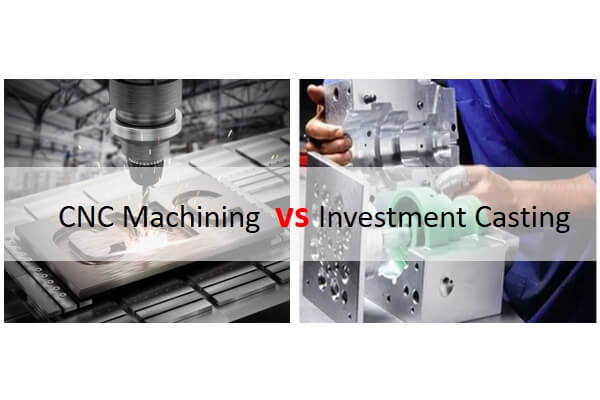
CNC machining and investment casting are two common methods in metal fabrication. Both have different benefits. This guide compares the two methods to help you choose the right one for your project.
What is CNC Machining?
CNC (Computer Numerical Control) machining is a process where tools like mills, lathes, and routers cut material from a solid block. The process uses CAD/CAM software to ensure accuracy. CNC machining is fast and works with many materials, like metals, plastics, and composites. It is good for both small and large production runs.
Key Benefits:
- Precision: Achieves tight tolerances (±0.001 mm).
- Versatility: Works with many materials.
- Rapid Prototyping: Quick for prototypes.
- Low Setup Costs: Minimal tooling needed.
Limitations:
- Material Waste: Material is removed from the workpiece.
- Limited to Solid Parts: Works best with external features.
What is Investment Casting?
Investment casting (also known as lost-wax casting) creates metal parts by pouring molten metal into a mold. The mold is made around a wax pattern. After the wax is melted, the cavity is filled with metal. Investment casting is good for complex shapes. It uses metals like stainless steel, aluminum, and titanium.
Key Benefits:
- Complex Shapes: Can create intricate designs.
- Minimal Waste: Little material is wasted.
- Good Surface Finish: Parts need little finishing.
- Material Flexibility: Works with many metals.
Limitations:
- High Setup Costs: Molds are expensive.
- Longer Lead Time: Takes time to create molds.
- Design Restrictions: Requires draft angles for mold removal.
CNC Machining vs. Investment Casting: A Comparison
| Feature | CNC Machining | Investment Casting |
|---|---|---|
| Manufacturing Method | Subtractive (removes material from solid block) | Additive-like (fills mold with molten metal) |
| Precision | High (±0.001 mm) | Moderate (±0.02 mm) |
| Material Compatibility | Metals, plastics, composites | Mainly metals (ferrous and non-ferrous) |
| Complexity | External features, precision parts | Complex internal cavities, intricate details |
| Lead Time | Short (1–5 days for low-volume runs) | Longer (2–4 weeks for mold setup) |
| Cost Efficiency | Cost-effective for small batches | Cost-effective for large batches |
| Waste | High (up to 70%) | Minimal |
When to Choose CNC Machining?
CNC machining is best for projects that need precision and speed. It works well for parts with simple shapes. It is good for low-volume runs or prototypes. It also works with a variety of materials.
Common Applications for CNC Machining:
- Aerospace: Brackets, engine parts.
- Medical: Surgical tools, implants.
- Automotive: Custom parts, prototypes.
- Electronics: Heat sinks, connectors.
When to Choose Investment Casting?
Investment casting is better for complex shapes and high-volume production. It can create parts with internal cavities or thin walls. It is ideal for large runs once the mold is made.
Common Applications for Investment Casting:
- Aerospace: Turbine blades, engine parts.
- Industrial Machinery: Valves, gears.
- Automotive: Exhaust parts, transmission components.
- Jewelry & Art: Intricate metal designs.
Key Differences in Choosing Between CNC Machining and Investment Casting
- Tolerances: CNC machining has tighter tolerances (±0.001 mm). Investment casting has looser tolerances (±0.02 mm).
- Volume: CNC machining is better for small runs (less than 500 parts). Investment casting is better for large runs (1,000+ parts).
- Material: CNC machining works with metals, plastics, and composites. Investment casting works only with metals.
- Design: CNC machining is good for external features. Investment casting is better for complex internal features.
- Budget: CNC machining has lower initial costs. Investment casting has lower costs for high-volume production.
How to Choose the Right Method
Both CNC machining and investment casting have their advantages. When choosing the right method, consider these factors:
- Precision: CNC machining for tight tolerances.
- Volume: CNC machining for low volume, investment casting for high volume.
- Design: CNC machining for external features, investment casting for complex designs.
At JC Casting, we specialize in both CNC machining and investment casting. Whether you need precision parts for low-volume production or complex, high-volume castings, our team is equipped to handle your unique requirements.
Contact JC Casting today to discuss how we can help bring your designs to life with the best manufacturing process for your needs. Reach out for a consultation and get a free quote!