
Professional Brass Casting Factory & Foundry – JC Casting
A Reliable Brass Casting Partner for Global Industries
In modern industrial manufacturing, brass casting remains one of the most widely adopted metal casting solutions for components that demand excellent machinability, corrosion resistance, and dimensional stability. From valves and plumbing systems to marine hardware and electrical components, brass casting parts are essential across a wide range of industries.
JC Casting is a professional brass casting manufacturer in China, operating a full-scale brass casting factory and foundry dedicated to supplying precision brass castings for global customers. As an experienced brass casting company, we provide stable material control, proven casting processes, and one-stop manufacturing services—from casting and machining to inspection and delivery.
This article explains what brass casting is, compares different brass casting processes, introduces popular brass alloys, and demonstrates what JC Casting can do as a long-term brass casting supplier.
What Is Brass Casting?
Brass casting is a metal casting process in which molten brass—an alloy primarily composed of copper and zinc—is poured into a mold to produce complex-shaped metal components. By adjusting the copper-to-zinc ratio and adding alloying elements such as lead, silicon, or aluminum, brass casting parts can be engineered for different mechanical, corrosion, and machining requirements.
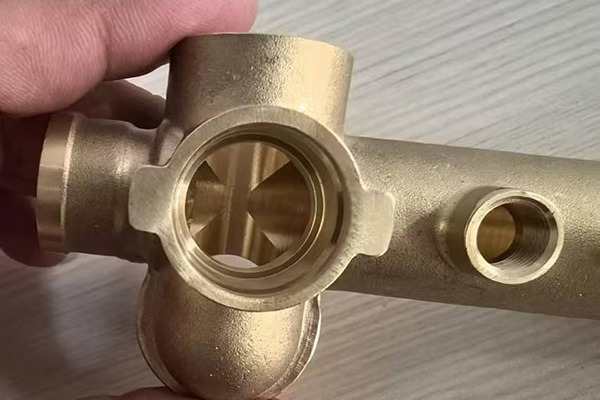
Compared with steel or iron castings, brass castings offer several key advantages:
- Excellent corrosion resistance
- Good wear resistance
- High electrical and thermal conductivity
- Superior machinability
- Attractive surface appearance
These properties make brass casting parts especially suitable for valves, fittings, plumbing components, marine hardware, electrical parts, and fluid control systems.
Brass Casting Processes We Use
Different applications require different manufacturing approaches. As a professional brass casting factory, JC Casting selects the most suitable casting method based on part geometry, tolerance, performance requirements, and cost targets.
1. Sand Casting for Brass
Process Overview:
Molten brass is poured into sand molds formed around a pattern.
Advantages:
- Cost-effective tooling
- Suitable for medium to large brass casting parts
- Flexible wall thickness and design changes
Limitations:
- Moderate dimensional accuracy
- Rougher surface finish than precision casting
Typical Products:
Brass valve bodies, plumbing fittings, flanges, pump housings.
2. Investment Casting (Lost Wax Casting) for Brass
Process Overview:
Wax patterns are coated with ceramic shells, melted out, and replaced with molten brass.
Advantages:
- High dimensional accuracy
- Excellent surface finish
- Ideal for complex and precision brass casting parts
- Reduced secondary machining
Limitations:
- Higher tooling cost than sand casting
- Best for small to medium-sized parts
Typical Products:
Precision brass valve components, connectors, fittings, decorative and functional parts.
3. Gravity Casting for Brass
Process Overview:
Molten brass flows into permanent or semi-permanent molds under gravity.
Advantages:
- Stable internal structure
- Consistent quality
- Suitable for repetitive production
Typical Products:
Valve and pump components, standardized brass parts.
Brass Casting Process Comparison
| Casting Method | Accuracy | Surface Finish | Tooling Cost | Suitable Applications |
|---|---|---|---|---|
| Sand Casting | Medium | Medium | Low | Large brass parts |
| Investment Casting | High | Very High | Medium | Precision brass parts |
| Gravity Casting | Medium–High | High | Medium | Valve & pump components |
Our brass casting foundry evaluates each project carefully to ensure the optimal balance between quality, cost, and lead time.
Brass Casting Materials We Produce
As a reliable brass casting manufacturer and supplier, JC Casting produces a wide range of brass grades according to ASTM, EN, and customer-specific standards. Material composition, mechanical properties, and chemical analysis are fully controlled and documented.
Common Brass Casting Alloys
| Brass Material Type | Typical Standards | Key Characteristics | Typical Applications |
|---|---|---|---|
| Yellow Brass | ASTM C857, C858 | Good strength, excellent machinability | Valves, fittings |
| Red Brass | ASTM C836, C844 | High copper content, superior corrosion resistance | Plumbing, marine |
| Leaded Brass | ASTM C360, C377 | Outstanding machinability | Precision machined parts |
| Naval Brass | ASTM C464 | Enhanced seawater resistance | Marine components |
Our engineers assist customers in selecting the most suitable brass alloy based on pressure, corrosion exposure, machining needs, and service environment.
Dimensional Accuracy & Surface Finish Capabilities
Typical capabilities from our brass casting factory include:
- Dimensional tolerance: ±0.3 mm to ±0.5 mm (depending on process)
- Surface roughness: Ra 3.2 – 6.3 μm
- Near-net-shape casting to minimize CNC machining
Secondary CNC machining is available for tight tolerance or functional surfaces.
Typical Applications of Brass Casting Parts
JC Casting supplies brass casting parts for a wide range of industries, including:
- Valve bodies and internal valve components
- Plumbing fittings and connectors
- Marine hardware and corrosion-resistant fittings
- Electrical terminals and connectors
- Pump and fluid control system components
As a long-term brass casting supplier, we focus on application-specific performance rather than producing generic parts.
Quality Control & Standards
Quality is a critical factor when selecting a brass casting company. JC Casting operates a strict quality management system throughout the entire manufacturing process.
Our Quality Control Includes:
- Raw material chemical composition analysis
- Mechanical property testing
- Dimensional inspection (CMM available)
- Surface defect and visual inspection
- PMI testing and third-party inspection upon request
Supported standards include ASTM, EN, and customized customer specifications.
Cost & Lead Time Considerations
Instead of publishing fixed prices, JC Casting focuses on transparent cost logic:
- Brass casting is more cost-effective than full CNC machining for complex parts
- Casting process selection significantly affects tooling and unit cost
- Batch production reduces per-piece cost
Typical Lead Time:
- Tooling & samples: 3–5 weeks
- Mass production: 4–6 weeks
One-Stop Brass Casting Manufacturing Services
JC Casting is not just a brass casting foundry—we are a full-service brass casting manufacturer offering:
- CNC machining
- Surface finishing (polishing, plating, coating)
- Heat treatment (if required)
- Assembly and customized packaging
This integrated approach reduces supplier coordination and shortens your supply chain.
Why Choose JC Casting as Your Brass Casting Manufacturer?
- Dedicated brass casting production lines
- Stable export experience to Europe and North America
- Engineering-driven process and material selection
- Strict material traceability and quality control
- Responsive technical and sales support
If you are looking for a dependable brass casting manufacturer in China, JC Casting is ready to support your project with consistent quality and professional service.
FAQ – Brass Casting
Q1: Brass casting vs bronze casting – what’s the difference?
Brass contains zinc and offers superior machinability, while bronze contains tin or other elements and provides higher wear resistance.
Q2: Is brass casting suitable for pressure applications?
Yes. With proper alloy selection and quality control, brass castings are widely used in valve and pressure systems.
Q3: Can JC Casting provide custom brass casting solutions?
Yes. We support custom designs, drawings, materials, and application-specific requirements.
Contact JC Casting – Your Professional Brass Casting Foundry in China
If you are sourcing high-quality brass casting parts from a reliable brass casting manufacturer, JC Casting is your trusted partner.
Contact our technical team today to discuss your drawings, materials, and production needs.