
Slurry Pump Impellers are the core wearable working parts of slurry pumps and the key components that transfer kinetic energy. They directly determine the operating efficiency and service life of equipment.
A standard impeller mainly consists of three parts: hub, cover plates and blades. The hub connects to the pump shaft and transmits rotational torque. Cover plates include front and rear cover plates. They cooperate with blades to form complete flow channels. Blades make direct contact with slurry and push the medium to flow through rotation.
Some impellers are fitted with auxiliary blades on the rear cover plate. These auxiliary blades mainly balance axial force. They also protect shaft seals and reduce abrasion from solid particles.

Main Structural Classifications of Slurry Pump Impellers
We divide impellers into three types by the layout of cover plates.
1.Closed Impeller
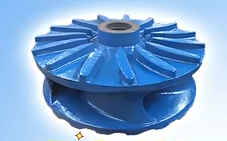
It comes with both front and rear cover plates. It delivers the highest hydraulic efficiency. It is widely used on site and mainly for conveying low-abrasion slurry with fine particles.
2.Semi-open Impeller
It comes with both front and rear cover plates. It delivers the highest hydraulic efficiency. It is widely used on site and mainly for conveying low-abrasion slurry with fine particles.
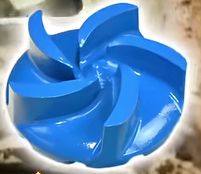
3.Open Impeller
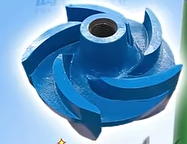
It has no front or rear cover plates. It provides the best anti-clog performance. It suits media carrying large particles and fiber impurities, though its overall efficiency is relatively low.
Main Impeller Materials and Selection Logic
Abrasion and corrosion trigger most failures of slurry pump impellers. Two mainstream materials are widely adopted.
1.High-chrome alloy
It stands strong erosion and abrasion. It matches heavy industrial high-wear working conditions such as mine tailings and sand slurry.
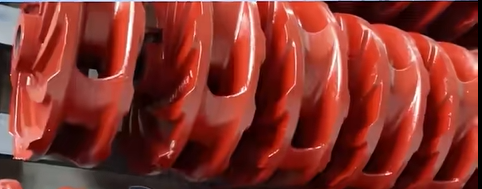
2.Rubber

It features good corrosion resistance and anti-cavitation performance. It applies to chemical slurry and fine coal slurry. It cannot work with hard, sharp solid particles. You can choose ceramic impellers for extreme corrosion scenarios. Ceramic composite impellers serve niche working conditions with heavy corrosion and low abrasion.
Special Reinforced Structural Design for High Slurry Abrasion
Manufacturers specially reinforce impellers for severe slurry abrasion conditions: They adopt thicker overall wall thickness and wide, smooth flow channels to lower slurry erosion. They use fewer but thicker blades to lift wear and impact resistance.
Selection Suggestion
Match the corresponding impeller structure and material according to the particle size, abrasion and corrosion of conveyed medium. Proper matching can effectively improve pump efficiency and cut operation and maintenance costs.
Why Choose JC Casting for Slurry Pump Impellers
As a professional slurry pump impeller manufacturer, we deliver fully customized closed, semi-open and open impellers made of high-chrome alloy, rubber and ceramic composite . Our abrasion-resistant casting design cuts your replacement and maintenance costs. We provide full material and dimension test certificates for OEM projects. We accept custom sizes and structural changes for special slurry media. We support stable fast delivery for bulk orders. Send us your drawings and working conditions to get a free quotation.