
Bronze sand casting is a pretty standard process we use. It’s great for making tough, durable bronze parts, and you’ll see it used a lot in industries like marine, pumps, valves, oil and gas, and heavy machinery.”
With excellent corrosion resistance, wear resistance, and design flexibility, bronze sand casting is an effective solution for manufacturing medium to large bronze parts with complex shapes and competitive costs.
However, choosing the right casting process and supplier can directly affect part quality, delivery time, and total production cost. This guide explains the bronze sand casting process, key advantages, common defects, cost factors, and how to select a reliable bronze sand casting foundry for industrial applications.
What Is Bronze Sand Casting?
Bronze sand casting is a metal casting process that uses a sand mold to create bronze components. During the process, molten bronze alloy is poured into a specially prepared sand cavity. After the metal cools and solidifies, the sand mold is removed, and the casting is cleaned, inspected, and finished according to customer requirements.
The basic principle of sand casting bronze components is simple, but achieving consistent industrial quality requires careful control of:
- Alloy composition
- Mold design
- Melting temperature
- Pouring conditions
- Cooling rate
- Finishing processes
Compared with precision casting methods such as investment casting, bronze sand casting is often preferred for medium to large components where cost efficiency and flexibility are important.
Bronze Sand Casting vs Investment Casting
| Factor | Bronze Sand Casting | Bronze Investment Casting |
| Mold type | Sand mold | Ceramic shell mold |
| Part size | Medium to large components | Small to medium precision parts |
| Surface finish | Good | Excellent |
| Dimensional accuracy | Moderate | Higher |
| Tooling cost | Lower | Higher |
| Production volume | Low to medium volume | Small to medium volume |
| Typical applications | Pumps, valves, marine parts | Precision industrial components |
For large bronze components or customized industrial parts, sand casting often provides a better balance between performance and manufacturing cost.
Why Choose Bronze for Sand Casting?
Bronze is one of the most widely used copper alloys in casting because it combines excellent physical properties with long-term reliability.
Excellent Corrosion Resistance
Bronze performs well in harsh environments where steel materials may experience corrosion. This makes it especially suitable for:
- Marine equipment
- Seawater pumps
- Ship components
- Chemical processing equipment
Aluminum bronze and silicon bronze alloys are particularly popular for applications exposed to saltwater and corrosive environments.
High Wear Resistance
Bronze has excellent wear resistance and low friction characteristics, making it ideal for moving and load-bearing components such as:
- Bushings
- Bearings
- Gears
- Wear plates
Good Machinability
Bronze castings can be easily machined after casting. This allows manufacturers to achieve:
- Accurate dimensions
- Smooth contact surfaces
- Tight assembly requirements
Long Service Life
When the correct alloy and casting process are selected, bronze components can provide reliable performance for many years, reducing replacement costs and equipment downtime.
Advantages of Bronze Sand Casting
Choosing bronze sand casting offers several important advantages for industrial manufacturers and OEM buyers.
1. Suitable for Large and Complex Bronze Components
One major advantage of sand casting is its ability to produce larger parts with complex geometries.
Unlike some casting methods limited by mold size, sand casting can manufacture components ranging from small parts to large industrial castings.
Typical examples include:
- Pump housings
- Valve bodies
- Marine components
- Industrial machinery parts
This flexibility makes bronze sand casting a preferred option for heavy-duty applications.
2. Lower Tooling Cost for Custom Parts
For customized bronze components, tooling cost is an important consideration.
Compared with die casting or investment casting, sand casting usually requires lower initial tooling investment.
This makes it suitable for:
- Prototype projects
- Replacement parts
- Small and medium production batches
- Customized OEM components
For companies developing new bronze products, sand casting can reduce development risks and shorten the production preparation period.
3. Flexible Bronze Alloy Selection
Different industrial applications require different bronze properties. A professional foundry can select the appropriate bronze alloy based on operating conditions.
Common bronze alloys used in sand casting include:
| Bronze Alloy | Main Properties | Common Applications |
| Tin Bronze | Excellent wear resistance and machinability | Bearings, bushings |
| Aluminum Bronze | High strength and corrosion resistance | Marine parts, valves |
| Silicon Bronze | Excellent corrosion resistance and weldability | Pumps, industrial components |
Proper alloy selection is critical for achieving the expected service life of bronze castings.
4. Cost-Effective Manufacturing Solution
For many industrial buyers, cost is a key factor when selecting a casting process.
Bronze sand casting helps control costs through:
- Lower mold cost
- Flexible production quantities
- Reduced tooling investment
- Ability to produce near-net-shape components
However, the lowest casting price does not always mean the lowest total cost. Poor casting quality can lead to machining problems, delays, and field failures.
Bronze Sand Casting Process Explained
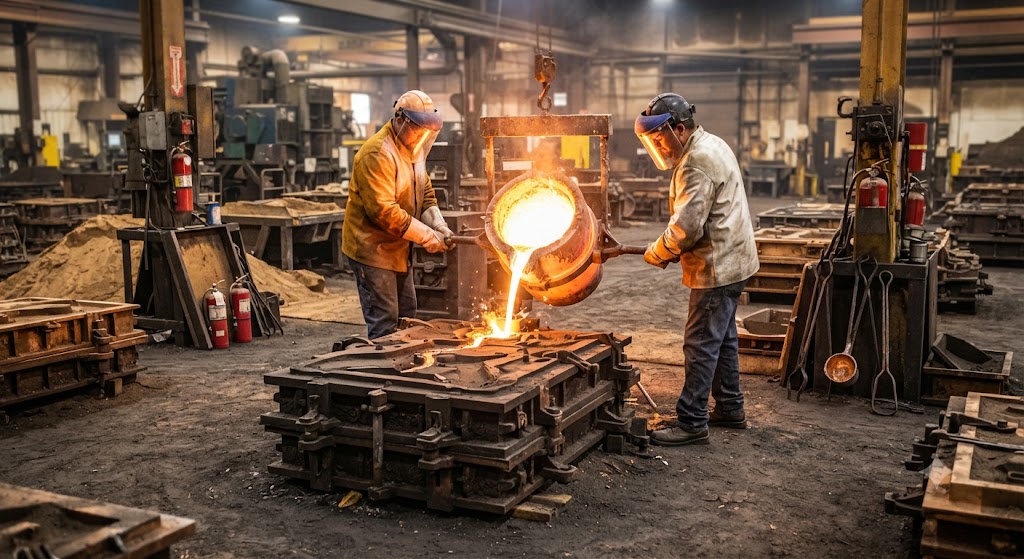
A reliable bronze sand casting process requires strict control at every manufacturing stage.
Step 1: Pattern Making
The process begins with creating a pattern that represents the final component shape.
Patterns can be made from:
- Wood
- Aluminum
- Steel
- Advanced composite materials
The pattern determines the final casting dimensions and directly affects casting accuracy.
Step 2: Sand Mold Preparation
The pattern is placed into molding sand to create the mold cavity.
The foundry controls important factors such as:
- Sand strength
- Mold hardness
- Permeability
- Core quality
For components with internal passages, sand cores are added to create hollow sections.
Step 3: Bronze Melting and Pouring
The selected bronze alloy is melted in a furnace under controlled conditions.
During melting, manufacturers monitor:
- Chemical composition
- Temperature control
- Metal cleanliness
The molten bronze is then carefully poured into the prepared sand mold.
Proper pouring control helps reduce defects such as oxidation, gas porosity, and incomplete filling.
Step 4: Cooling and Shakeout
After pouring, the casting remains inside the mold until the bronze fully solidifies.
The cooling process affects:
- Mechanical properties
- Internal structure
- Defect formation
After cooling, the sand mold is removed, and the casting is cleaned.
Step 5: Finishing and Machining
After cleaning, bronze castings may require additional processing, including:
- Grinding
- Shot blasting
- CNC machining
- Surface finishing
Machining ensures that the final component meets customer drawings and assembly requirements.
Step 6: Inspection and Quality Control
Industrial bronze castings require strict inspection before shipment.
Common inspection methods include:
- Dimensional inspection
- Chemical composition testing
- Visual inspection
- Non-destructive testing (NDT)
A professional bronze sand casting foundry should have a complete quality control system to ensure consistent production.
Common Bronze Sand Casting Defects and Solutions
Understanding bronze sand casting defects is important for engineers and purchasing teams because casting quality directly affects product reliability.
| Defect | Main Cause | Prevention Method |
| Porosity | Gas trapped inside casting | Improve melting and pouring control |
| Shrinkage cavity | Poor feeding design | Optimize riser system |
| Cold shut | Low pouring temperature or poor flow | Improve mold design and temperature control |
| Sand inclusion | Poor mold quality | Improve sand preparation |
| Cracks | Thermal stress during cooling | Control cooling conditions |
Working with an experienced foundry can significantly reduce casting defects through better process design and inspection.
Industrial Applications of Bronze Sand Casting
Bronze sand casting is widely used across industries that require corrosion resistance, durability, and reliable mechanical performance.
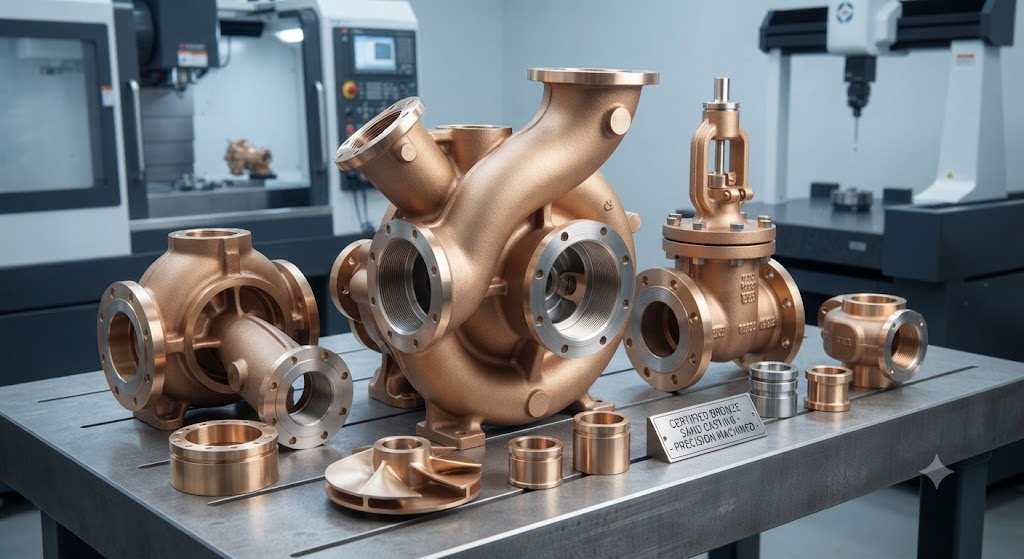
Marine Industry
Bronze is widely used in marine environments because of its resistance to seawater corrosion.
Applications include:
- Marine valves
- Pump components
- Propeller-related parts
- Ship equipment components
Pump and Valve Industry
Bronze is commonly selected for pumps and valves because it combines strength, corrosion resistance, and wear resistance.
Typical parts include:
- Valve bodies
- Pump housings
- Impellers
- Bushings
Oil & Gas and Petrochemical Industry
Industrial systems often require materials that can withstand harsh operating conditions.
Bronze components are used in:
- Corrosion-resistant valves
- Special equipment parts
- Sealing components
Bronze Sand Casting Cost Factors
Many buyers search for bronze sand casting quotes, sand casting bronze quotes, or a sand casting bronze pricelist when evaluating suppliers.
However, bronze casting does not have a fixed price list because each project has different requirements.
The main factors affecting cost include:
| Cost Factor | Impact on Price |
| Bronze alloy type | High |
| Casting weight | High |
| Part complexity | Medium to High |
| Production quantity | Medium |
| Machining requirements | Medium to High |
| Inspection requirements | Medium |
Material Cost
Different bronze alloys have different prices depending on alloy elements and market conditions.
Component Weight
Heavier castings require more:
- Raw material
- Melting energy
- Handling work
Design Complexity
Complex designs may require:
- More advanced patterns
- Additional cores
- More machining operations
Additional Services
Costs may increase if the project requires:
- CNC machining
- Heat treatment
- Surface finishing
- Special inspection
For accurate bronze sand casting quotes, suppliers need complete information, including drawings, material requirements, quantity, and quality standards.
How to Choose a Reliable Bronze Sand Casting Foundry
Selecting the right bronze sand casting foundry is one of the most important decisions for industrial buyers.
A qualified supplier should provide more than casting production capability.
1. Experience with Bronze Casting
Look for manufacturers with experience producing:
- Bronze industrial components
- Copper alloy castings
- Similar applications
Experience helps prevent common issues related to alloy selection and casting defects.
2. Complete Manufacturing Capability
A reliable foundry should offer:
- Pattern making
- Sand casting
- Machining
- Surface finishing
- Inspection
A complete production chain reduces communication problems and improves delivery control.
3. Strong Quality Control
Important quality capabilities include:
- Material analysis
- Dimensional inspection
- Process monitoring
- Traceability systems
Quality control is especially important for marine, pump, valve, and petrochemical applications.
4. Engineering Support
A professional supplier should help customers optimize:
- Component design
- Casting structure
- Manufacturing cost
- Production feasibility
Early engineering involvement can reduce production risks and improve final product performance.
Why Choose JC Casting for Bronze Sand Casting?
JC Casting provides custom metal casting and machining solutions for global industrial customers.
With more than 20 years of casting experience, JC Casting supports customers with:
- Bronze sand casting
- Investment casting
- CNC machining
- Custom OEM manufacturing
- Quality inspection
The company works with customers in industries including:
- Marine
- Pumps and valves
- Oil and gas
- Industrial machinery
From material selection to final production, JC Casting helps customers develop reliable bronze components that meet engineering requirements.
Frequently Asked Questions About Bronze Sand Casting
What is bronze sand casting?
Bronze sand casting is a manufacturing process that uses sand molds to produce bronze components. It is widely used for industrial parts requiring corrosion resistance, durability, and cost efficiency.
How much does bronze sand casting cost?
The cost depends on factors such as bronze alloy, part size, complexity, quantity, machining requirements, and inspection standards. A supplier needs project details before providing accurate bronze sand casting quotes.
What are common bronze sand casting defects?
Common defects include porosity, shrinkage cavities, cold shuts, sand inclusion, and cracks. Proper mold design, process control, and inspection help prevent these problems.
What industries use bronze sand casting?
Bronze sand casting is commonly used in marine equipment, pumps, valves, oil and gas systems, petrochemical equipment, and industrial machinery.
How do I choose a bronze sand casting foundry?
Choose a supplier with proven bronze casting experience, complete manufacturing capabilities, strong quality control, and engineering support.
Key Takeaways
Bronze sand casting remains an important manufacturing solution for producing durable and cost-effective bronze components for demanding industries.
The success of a bronze casting project depends on several factors, including alloy selection, casting process control, quality inspection, and supplier capability.
By working with an experienced bronze sand casting foundry, companies can reduce production risks, improve component reliability, and achieve better long-term value.
If you are looking for custom bronze sand casting solutions, JC Casting can provide professional support from design review to finished components.