
Billet Valve Cover vs Cast Valve Cover: Manufacturing, Cost & Performance Comparison
Valve covers play a critical role in protecting the top end of an engine while ensuring proper sealing and ventilation. In performance and OEM applications, two common manufacturing methods are widely used: billet machining and casting.
This article compares both solutions from engineering and procurement perspectives to help buyers choose the right option.
1. What Is a Billet Valve Cover?
A billet valve cover is machined from a solid block of aluminum using CNC machining. It is a subtractive manufacturing process where material is removed to achieve final geometry.
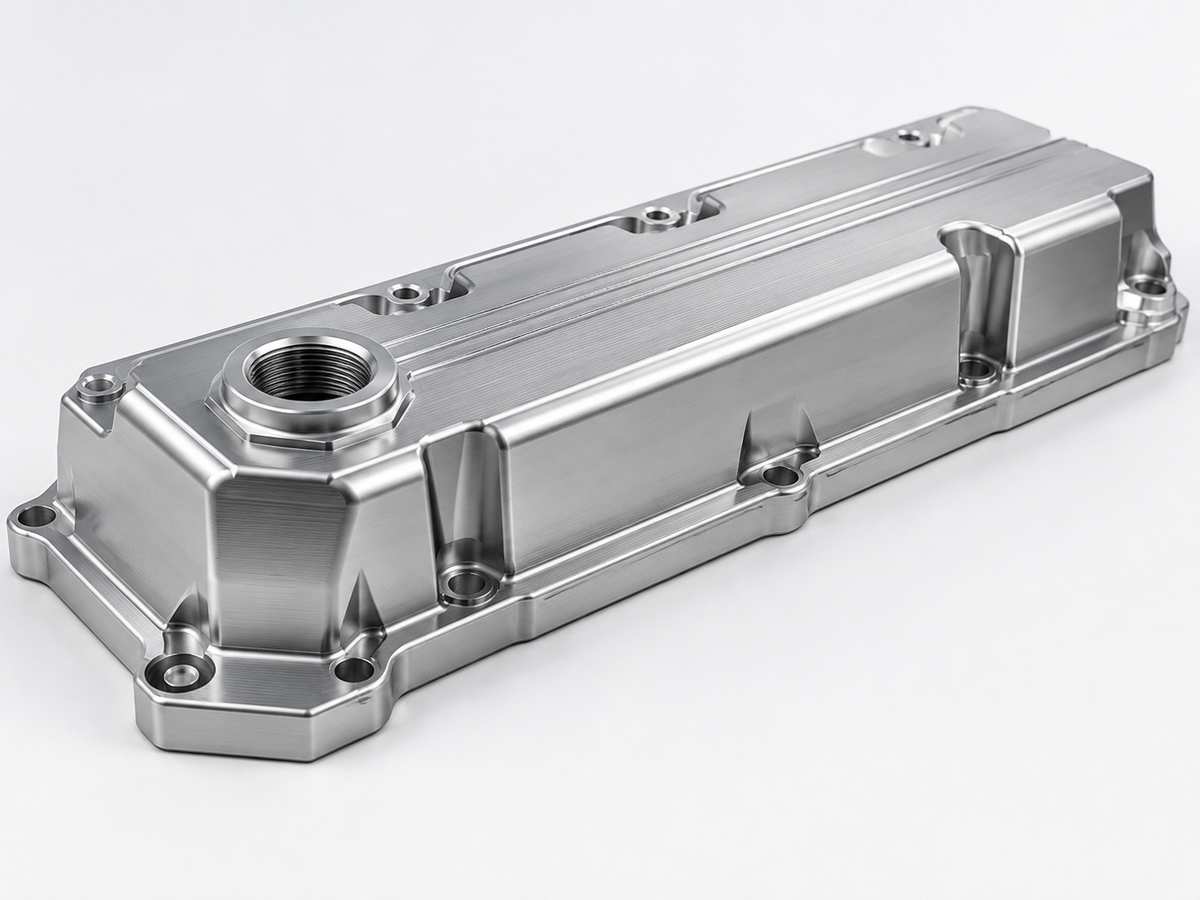
Key Features
- High machining precision
- Solid structure without casting porosity
- Premium surface finish
- Highly customizable design
2. What Is a Cast Valve Cover?
A cast valve cover is produced by pouring molten aluminum into a mold. It is a near-net-shape manufacturing process suitable for mass production.
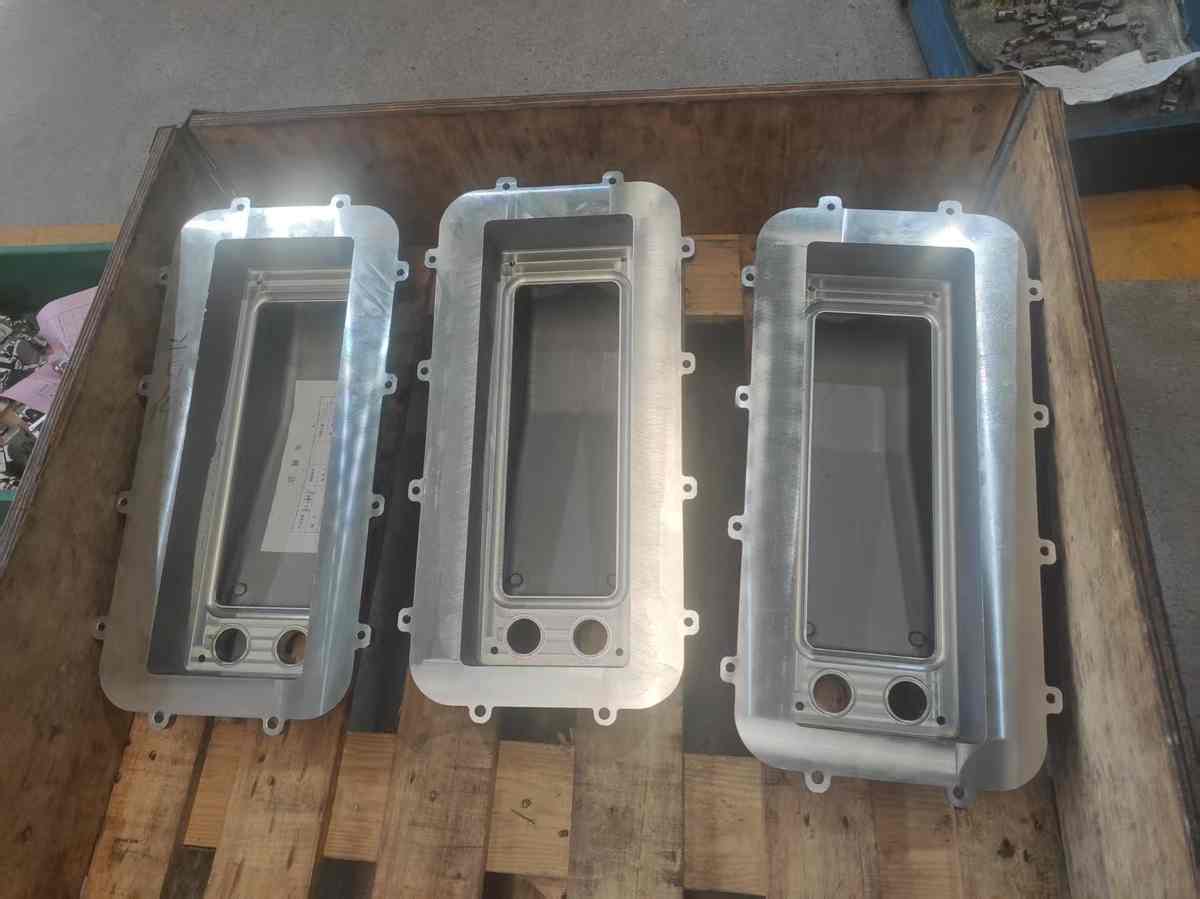
Key Features
Suitable for mass production
- Lower unit cost
- Complex shapes can be formed easily
- Requires post-machining for sealing surfaces
3. Billet Valve Cover vs Cast Valve CoverManufacturing Process Comparison
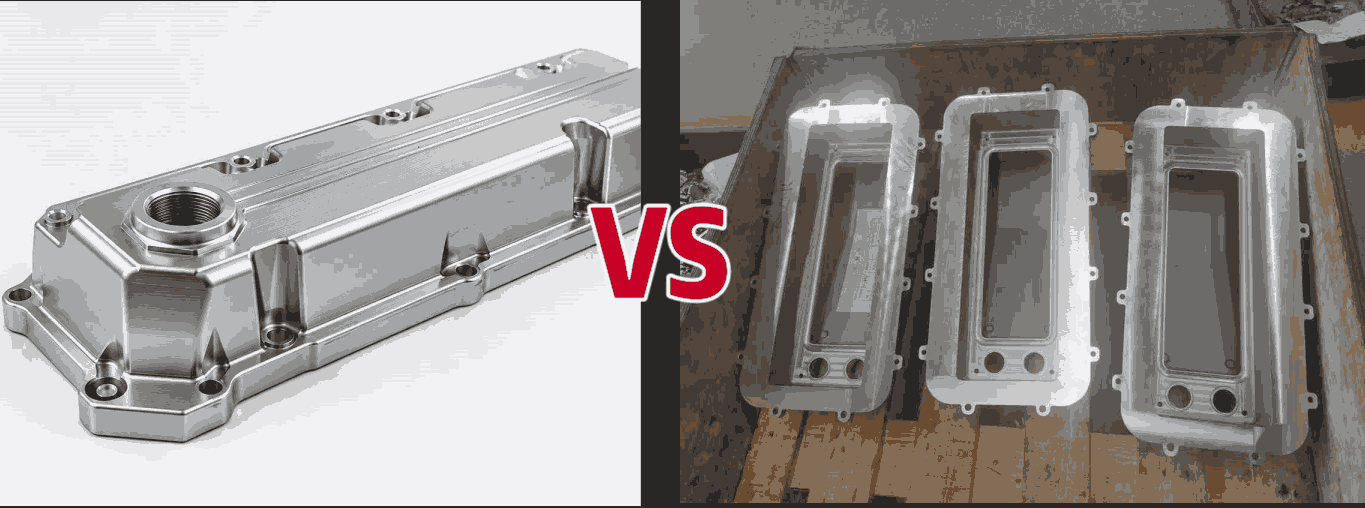
| Item | Billet (CNC Machining) | Casting |
|---|---|---|
| Method | Material removal | Molten metal molding |
| Tooling | No mold required | Mold required |
| Production speed | Slow | Fast |
| Waste material | High | Low |
| Precision | Very high | Medium (depends on machining) |
Key Insight:
Billet = precision-driven manufacturing
Cast = efficiency-driven manufacturing
4. Cost Structure Analysis
Billet Valve Cover Cost Drivers
- High CNC machining time
- Low material utilization
- Skilled programming required
- Small batch production
👉 Result: High unit cost, premium pricing
Cast Valve Cover Cost Drivers
- High initial mold cost
- Very low per-unit cost in mass production
- Efficient production cycle
👉 Result: Low unit cost, OEM-friendly pricing
5. Performance & Quality Comparison
Advantages
Billet Advantages
- Higher structural integrity
- No porosity defects
- Better sealing accuracy
- Premium appearance
- Ideal for high-performance engines
Cast Advantages
- Proven OEM reliability
- Good strength for standard engines
- Cost-effective solution
- Suitable for high-volume applications
Limitations
Billet Weaknesses:
- Expensive
- Not suitable for mass production
- Over-engineered for normal vehicles
Cast Weaknesses:
- Possible internal porosity
- Lower dimensional consistency
- Requires machining for sealing surfaces
6. Market Applications
Billet Valve Covers
- Racing engines
- High-performance aftermarket
- Turbocharged or modified engines
- Custom builds and show cars
👉 Market characteristics: niche, high-margin, and customized.
Cast Valve Covers
- OEM automotive production
- Replacement parts market
- Industrial-scale manufacturing
- Standard passenger vehicles
👉 Market characteristics: large-scale, stable, and price-sensitive.
7. Which One Should You Choose?
Choose Billet if:
- Performance and precision matter
- Custom design is required
- Budget is not the main concern
Choose Cast if:
- Large-scale production is required
- Cost efficiency is critical
- Standard OEM quality is sufficient
8. Key Takeaway
Billet valve covers are designed for performance, precision, and customization, while cast valve covers are optimized for cost efficiency and mass production.
FAQ
1. Is billet better than cast valve cover?
Billet is stronger and more precise, but cast is more cost-effective for mass production.
2. Why is billet so expensive?
Because it requires long CNC machining time and wastes more raw material.
3. Are cast valve covers reliable?
Yes, OEM cast valve covers are widely used in most production vehicles.
4. Which is better for performance engines?
Billet is preferred for high-performance or racing applications.
If you have any requirement of the valve cover, you can let us know the applications, material grade. We can provide our solutions for your project! Contact us today!