
CF8, CF8M, CF3 and CF3M are stainless steel castings under ASTM A351 US standard.
F304, F316, F304L and F316L are stainless steel forgings under ASTM A182 US standard.
C short for casting. Casting means metal casting.
F short for forging. Forging means metal forging.
Stainless Steel Casting Grade Matches
CF8 equals 304
CF3 equals 304L
CF8M equals 316
CF3M equals 316L
Stainless Steel Forging Grade Matches
F304 equals 304
F304L equals 304L
F316 equals 316
F316L equals 316L
CF3, CF8, CF3M, CF8M (Cast Stainless Steel)
This group covers cast stainless steel grades from US ASTM standards.Manufacturers make cast parts like valves and pump bodies with them. We cover their chemical makeup and performance below.
CF3 (ASTM A351)
◦ Matching Chinese standard grade: 022Cr19Ni10 (cast version of 304L)
◦ Max carbon content sits at 0.03%. It is low-carbon austenitic stainless steel. It resists intergranular corrosion well. It outperforms CF8 in corrosion resistance. Factories widely use it for chemical and food processing equipment.
Main Applications
压缩.png)
◦ Food & Beverage: Brewing gear, dairy pipelines. It resists rust and meets global sanitary standards.
◦ Light Chemical Industry: Reactors and valves for dilute nitric acid and organic acid. Low carbon lowers intergranular corrosion risks.
CF8 (ASTM A351)
◦ Matching Chinese standard grade: 06Cr19Ni10 (cast version of 304)
◦ Max carbon content hits 0.08%. It is classic austenitic stainless steel. It delivers reliable corrosion resistance. It works for acid and heat-resistant conditions, such as hot water and nitric acid environments.
Main Applications
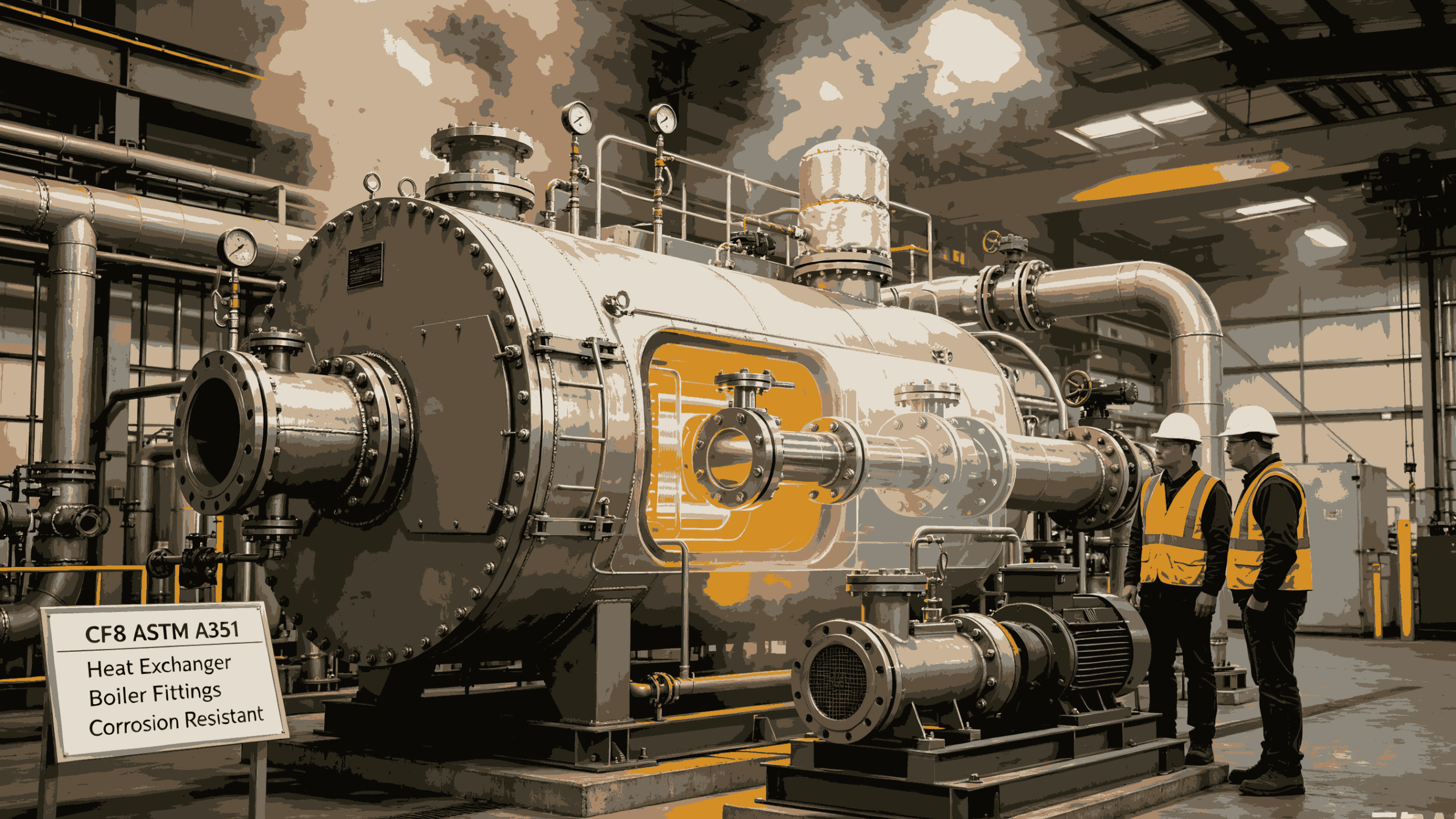
◦ High-temperature work: Heat exchangers, boiler fittings. It withstands heat under 800°C.
◦ General anti-corrosion use: Water treatment gear, pipelines for low-corrosion media in fertilizer production.
CF3M (ASTM A351)
◦ Matching Chinese standard grade: 022Cr19Ni11Mo2 (cast version of 316L)
◦ Makers add 2 to 3% molybdenum (Mo) to CF3 base material. It gains stronger corrosion resistance. It fights chloride ion corrosion extremely well, including seawater and salt solutions. Marine and chemical equipment rely on this grade.
Main Applications
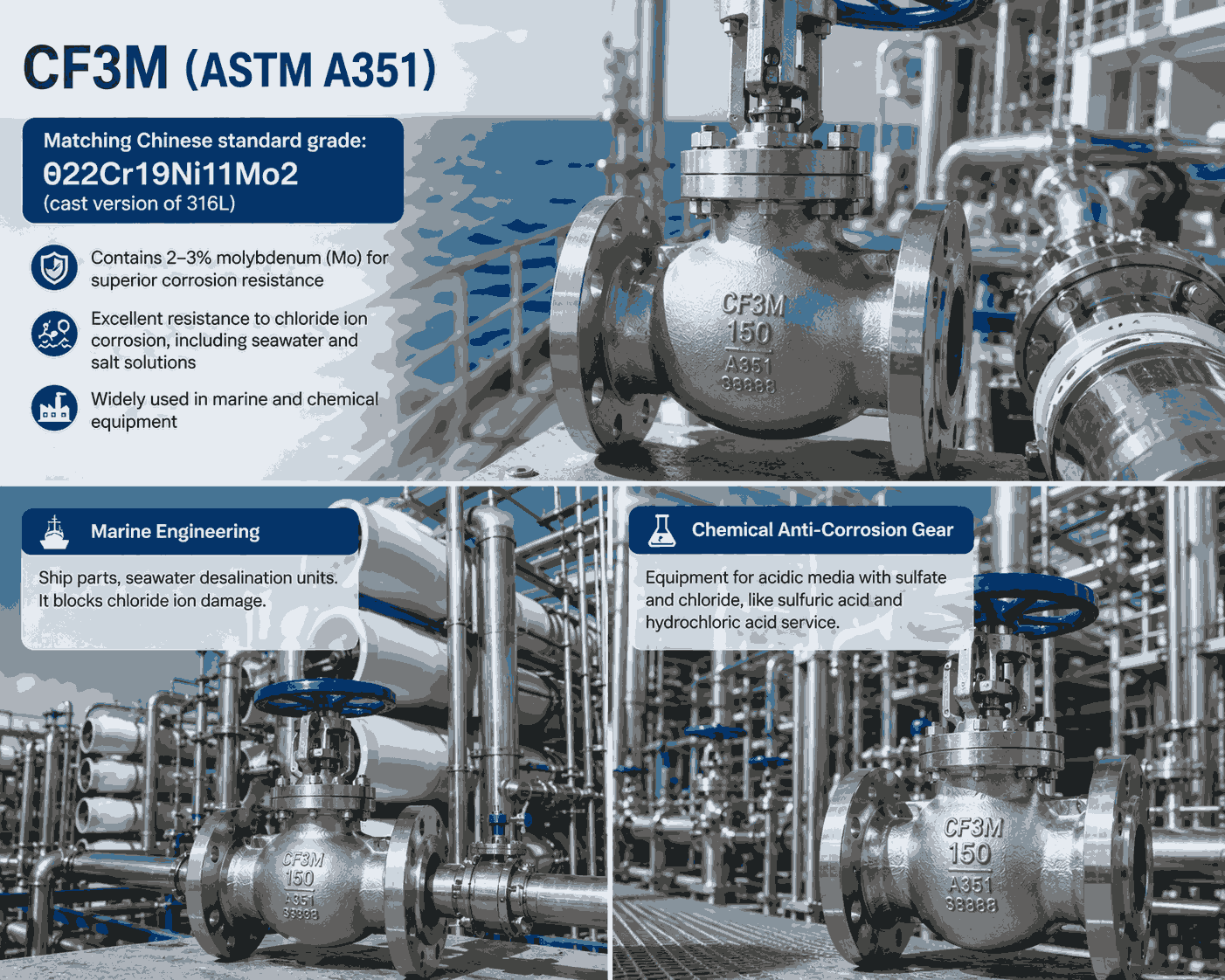
◦ Marine Engineering: Ship parts, seawater desalination units. It blocks chloride ion damage.
◦ Chemical Anti-Corrosion Gear: Equipment for acidic media with sulfate and chloride, like sulfuric acid and hydrochloric acid service.
CF8M (ASTM A351)
◦ Matching Chinese standard grade: 06Cr19Ni11Mo2 (cast version of 316)
◦ Max carbon content is 0.08%. It contains molybdenum. It beats CF8 on corrosion resistance. It fits medium corrosive media environments, such as acetic acid and phosphoric acid service.
Main Applications
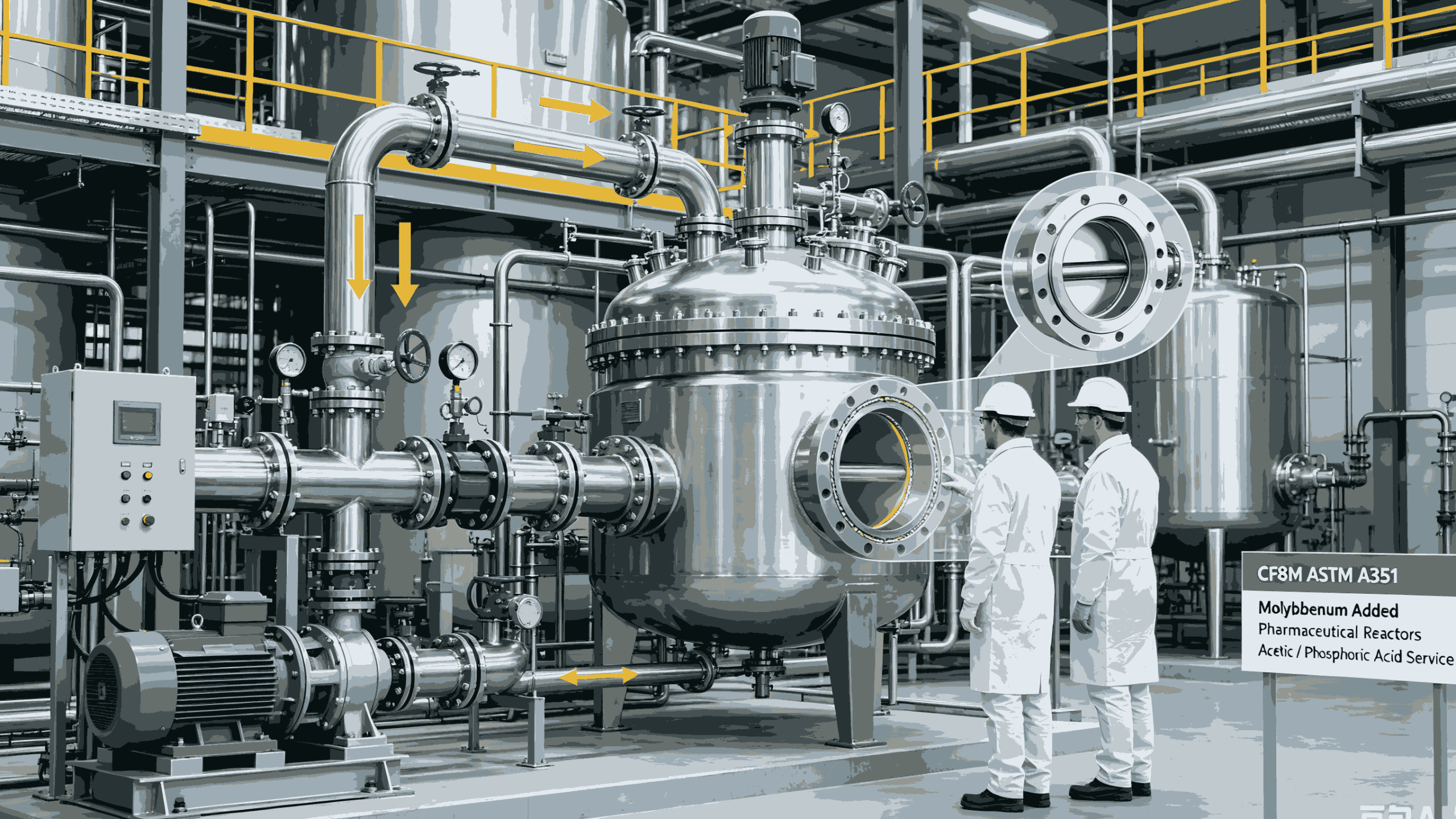
◦ Pharmaceutical Equipment: Reactors that touch antibiotics and organic acids. Molybdenum boosts anti-corrosion performance.
◦ Petrochemical Industry: Pipelines and valves for medium-concentration acetic acid and phosphoric acid.
F304, F316, F304L, F316L (Forged Stainless Steel)
This set includes forged stainless steel grades under ASTM A182 standards.Fabricators produce forgings like flanges and pipe fittings from these grades. They focus on high strength and easy machining. We break down each grade in detail below.
F304 (ASTM A182)
◦ Matching Chinese standard grade: 06Cr19Ni10 (forged version of 304)
◦ Max carbon content reaches 0.08%. It is austenitic stainless steel. It balances all-round performance with solid corrosion resistance and good machinability.
Main Applications
◦ Daily Products: Tableware, kitchen cookware. 304 stainless steel makes water bottles and pots widely.
◦ Architectural Decoration: Railings, curtain walls. It resists atmospheric rust and shapes easily during processing.
◦ Food Processing Machinery: Biscuit molds, beverage filling machines. It meets food-grade safety rules.
F316 (ASTM A182)
◦ Matching Chinese standard grade: 06Cr17Ni12Mo2 (forged version of 316)
◦ Max carbon content hits 0.08%. It adds molybdenum. It performs better than F304 against pitting and crevice corrosion.
Main Applications
◦ Medical Field: Surgical tools, body implants. It resists corrosion from body fluids. Manufacturers use 316L more often here.
◦ Industrial Equipment: Dye and paper-making machines. It stops rust from sulfide and halide substances.
F304L (ASTM A182)
◦ Matching Chinese standard grade: 022Cr19Ni10 (forged version of 304L)
◦ Max carbon content limits to 0.03%. It is low-carbon 304 stainless steel. It delivers stronger intergranular corrosion resistance after welding. Builders use it for welded structures such as storage tanks and pipelines.
Main Applications
◦ Welded Structures: Large storage tanks, pressure pipelines. Low carbon cuts welding crack risks.
◦ Chemical Containers: Reactors and heat exchangers that need frequent welding work.
F316L (ASTM A182)
◦ Matching Chinese standard grade: 022Cr17Ni12Mo2 (forged version of 316L)
◦ Max carbon content stays at 0.03%. It is low-carbon 316 stainless steel. It offers top-tier corrosion resistance and weldability. It fits harsh corrosive environments, including marine engineering and pharmaceutical equipment.
Main Applications
◦ Severe Corrosion Settings: Offshore platforms, salt spray equipment. It resists seawater and chloride ion erosion.
◦ Pharmaceutical & Food Lines: Pipelines with strict cleanliness standards, such as injection production lines. Low-carbon material supports easy full cleaning.
Core Differences Summary
• Cast vs Forged: CF grades are castings. They fit complex-shaped parts. F grades are forgings. They deliver higher strength and toughness.
• Carbon Content: Grades marked with “L” (CF3, F304L) hold lower carbon. They resist intergranular corrosion better.
• Molybdenum Element: Grades with “M” (CF3M, F316) contain molybdenum. Their corrosion resistance (especially against chloride ions) rises sharply.
• Corrosion Demand: Molybdenum grades (CF3M, F316L) work first for seawater and strong acid chemical environments. Molybdenum-free grades (CF3, F304) suit neutral or mild corrosion conditions.
• Welding Requirement: Low-carbon “L” grades (F304L, F316L) fit structures with heavy welding work. They prevent post-weld intergranular corrosion.
• Forming Method: CF cast grades make complex shapes like valve bodies. F forged grades make high-strength parts like flanges and shafts.
For reliable CF8, CF8M, CF3, and CF3M castings that meet ASTM A351 standards, trust JC Casting—your professional precision casting factory specializing in austenitic stainless steel components. We deliver high-quality, corrosion-resistant cast parts tailored for pharmaceutical, petrochemical, and high-temperature industrial applicationsneocastall. Contact us for custom solutions and competitive pricing.